Interviews from the world of science!

Written By: Michael D. McClellan |

David Tong’s office has a view of the courtyard where Sir Isaac Newton once lived, and just beyond that, the location of the famous apple tree that gave birth to Newton’s theory of gravitation. Tong, like Newton, is a fellow of Trinity College, and his gig as theoretical physicist at the University of Cambridge comes with a myriad of such history-infused perks. He’s lectured in the same room as Michael Faraday, considered the godfather of electromagnetism; roamed the same halls as Sir J.J. Thomson, the Nobel Laureate credited with the discovery of the electron; and worked in the same lab (Cavendish Laboratory) where 30 researchers have gone on to win Nobel Prizes. Tong’s area of focus is quantum field theory, a topic made popular in the mainstream by the Large Hadron Collider, located in Geneva, Switzerland. Remember the LHC? The switch got flipped, and billions of protons flew around a seventeen-mile loop at nearly the speed of light until they smashed together hard, harder than any subatomic particles have ever been smashed together on earth. It was the greatest, most anticipated, most expensive experiment in the history of mankind. It also proved the existence of the elusive Higgs boson, better-known in pop culture as the “God particle,” which was the last holdout particle remaining hidden during the quest to check the accuracy of the Standard Model of Physics. Tong, like the rest of the scientific community at the time, was keenly interested in the experiments at the LCH, but he was hardly surprised by the results.

“It was almost anticlimactic,” Tong says of the July 4, 2012, discovery of the Higgs. “The science had long predicted the existence of the Higgs boson, and the fact that it agreed with the Standard Model made absolutely perfect sense. Nonetheless, it was a profound discovery.”
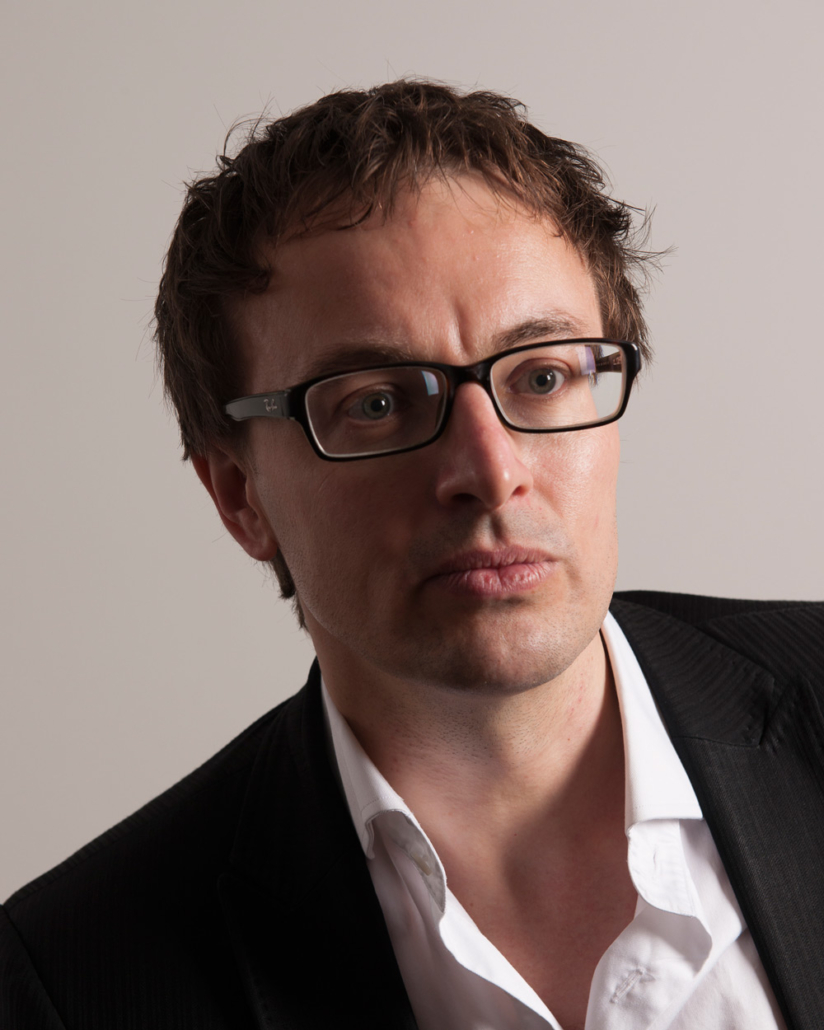
Photo Courtesy David Tong

Tong pauses. He understands that, for most of us, the Standard Model is a complete and utter snoozefest.

“The theory, to put it simply, is the pinnacle of science,” he continues, in his gentlemanly British accent. “It’s the greatest theory we’ve ever come up with, and yet we’ve given it the most astonishingly rubbish name you’ve ever heard of. The Standard Model. You can’t get much more boring than that.”

Born in Crawley, England, David Tong came of age at a time when Britain was being convulsed by a social, cultural and political counter-revolution. Margaret Thatcher emerged as the political face of the decade. There was violence on the football terraces and on the inner-city streets. Graffiti artists like Robert Del Naja, otherwise known as 3D, came to symbolize the disaffected youth in the dark dystopia of 1980s Bristol. The forces that drove the punks and new wave bands that followed them were similar to those that motivated the Thatcherite ideologues – profound desire for consensus-breaking transformation. This was also a time of great innovation in pop music, as bands inspired by the can-do attitude of the punks and by the art-school cool of David Bowie began to experiment with synthesisers and computers, new technologies that would change forever the way music was made. Tong is a reflection of this creative-yet-turbulent period in British history. He emerged from humble beginnings, growing up in a working class neighborhood, himself as ordinary a boy as you might imagine. The 2008 winner of the Adams Prize, the highest honor at Cambridge University, is as down-to-earth as any big thinker that you’ll ever meet, a real genius who made it Cambridge on his own steam, socioeconomic barriers be damned.

“That period was hard on Britain’s working class,” Tong replies, when asked about those bleak days during the ‘80s. “We weren’t alone in that respect. Everyone else was in it right along with us.”
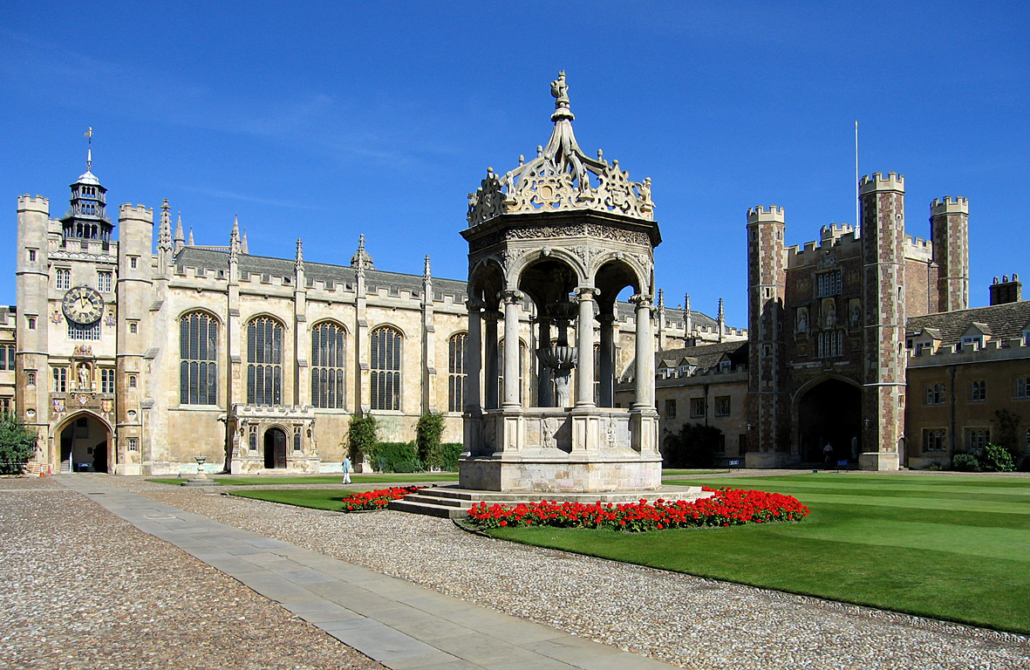
Trinity College – University of Cambridge

Talk to him today and you’ll discover that Tong’s just as comfortable ranking Aerosmith’s discography as he is theorizing about dark energy, the mysterious antigravitational force causing everything in the universe to repel everything else. Close your eyes and it’s easy to imagine him making regular hit-and-run raids on London to visit clubs such as the Wag, the Electric Ballroom, the Cha-Cha under the arches at Charing Cross, and the Camden Palace. That’s because Tong, for all of his genius, did his fair share of partying during his late teens and early twenties.

“Let’s just say there were times when I could have applied myself more,” he says with a laugh. “It took a while for me to prioritize things properly.”

Tong’s life at that time, like everything else during the mid-80s, became becalmed. Britain’s fiercest political battles had been fought and won. The miners were defeated. Free-market fundamentalism was the new orthodoxy. People began to feel richer. The pop music was dismal. The culture became coarser and more reactionary. Tong would make his way north from Crawley to London in search of the latest concert, unsure of how he’d make it back home after. Memories just as meaningful as his road to higher learning.

“I had so much fun on those trips to London,” he says. “We got to see so many great concerts, and some bad ones, too.”

Tong attended Hazelwick, a comprehensive school whose notable pupils include Laura Moffatt, a Crawley native and former member of Parliament. From there he attended the University of Nottingham, earning his Bachelor of Science in Mathematical Physics. His next stop was at Kings College in London, where he earned his Masters of Science in Mathematics. In 1995 he headed to Swansea, where he attended the University of Wales and completed his PhD in Theoretical Physics. All of this setting the stage for his jump across the pond – to the University of Washington as a visiting student, then to Columbia University for his postdoctoral research, followed by stops at MIT and Stanford.
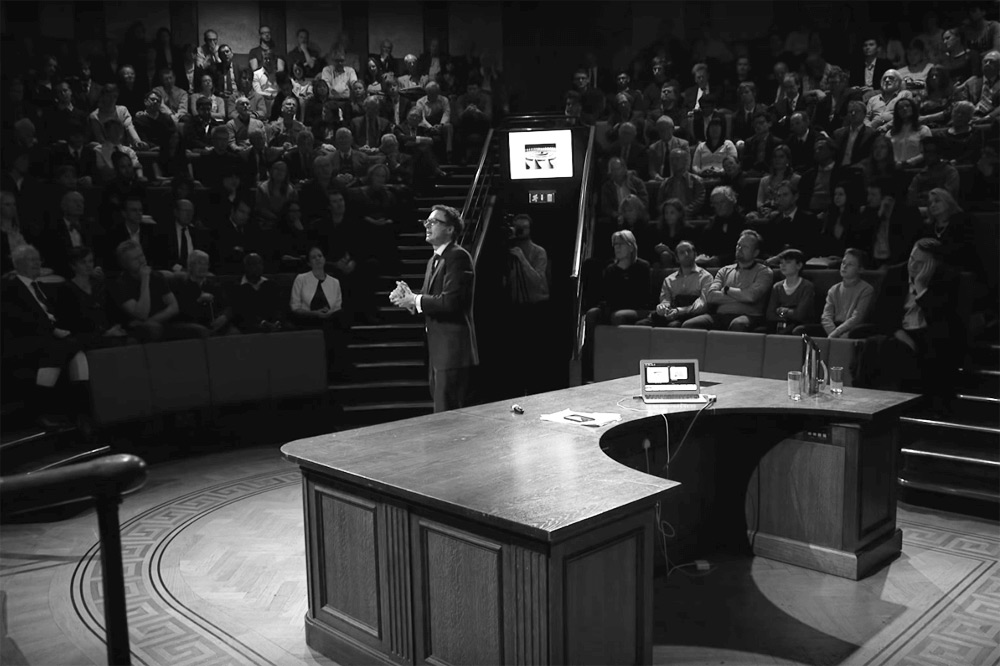
David Tong lectures during the Royal Institution’s Christmas Lectures series

“I grew up at MIT,” Tong says, reflecting on his journey to the hallowed halls of Cambridge. “Until I got there, I wasn’t truly invested as I should have been. At MIT, I learned what it takes to be a serious physicist, and I think that’s when I truly applied myself.”

Today, Tong is fully invested in quantum field theory. His lectures include classical mechanics, electromagnetism, quantum mechanics, condensed matter, and statistical physics. The charismatic professor has been a part of the Royal Institution’s Christmas Lectures (be sure to check him out on YouTube), which date back to Faraday’s time at Cambridge. And he continues to ponder the biggest problems in our universe, including the ever-elusive quest for a theory of everything.

“If you are a theoretical physicist, it’s something you endeavor to – but it’s also something that you’re likely to fail at. You know this going in. It’s the price of admission.”

Tong’s generation of theoretical physicists is only the most recent to embark on it. The idea seemed logical enough when Einstein first set out on it in the 1920s. If general relativity explains the universe from afar – why gravity pulls the earth around the sun – and quantum mechanics explains the world up close – how atoms, protons, and neutrons react to electromagnetism and the strong and weak forces – surely there must be a way to put the two theories together. After all, whether cosmic in size or minuscule, the particles and forces that govern our universe were all born at the same primordial moment. Yet Einstein failed. And in the interim, armies of physicists, equipped with similarly well-intentioned yet ultimately faulty or unprovable ideas, have followed him to the same well-trod dead end. Tong knows this going in, but that doesn’t make him any less determined.

“We theoretical physicists are gluttons for punishment,” he says, chuckling. “The only way you make a breakthrough is to keep hammering way. It’s what we do.”

Let’s jump in a DeLorean and time travel back to your childhood.

To be honest, it’s not the most interesting time of my life. I grew up in Crawley, England, which is a commuter town about 30 miles south of London. It’s an ugly town [laughs]. It’s got Britain’s second largest airport next to it – Gatwick Airport – so there was zero unemployment at a time in the 1980s when unemployment was rife in the country. I don’t have many complaints. It was a fine place to be, but it’s not a place that I’m desperate to go back to – actually, that’s not quite true because my mom still lives there, and everybody wants to go back home and see their mom! Other than that, there’s not too much going for it.


What was the school system like in Crawley, England?

Education is clearly important if you’re going to be a theoretical physicist. I went to a fairly good school, but there is a gap in this country between private education and what you guys in the States call public education. In the UK we have this Orwellian speak. Public schools are the fancy ones you pay 30,000 pounds a year to attend, and then you have the state schools, which is the kind that I went to. I had an okay education. In the context of my larger family, there wasn’t a history of education or going to university. No one in my family had ever gone to university before, so I was something of a trailblazer in that respect. I had very supportive parents, my mom in particular. She was a schoolteacher, so she really thought that education was crucial. I went off to a place called Nottingham. My American friends think this is fictional, because that’s where Robin Hood is from, but it really exists.
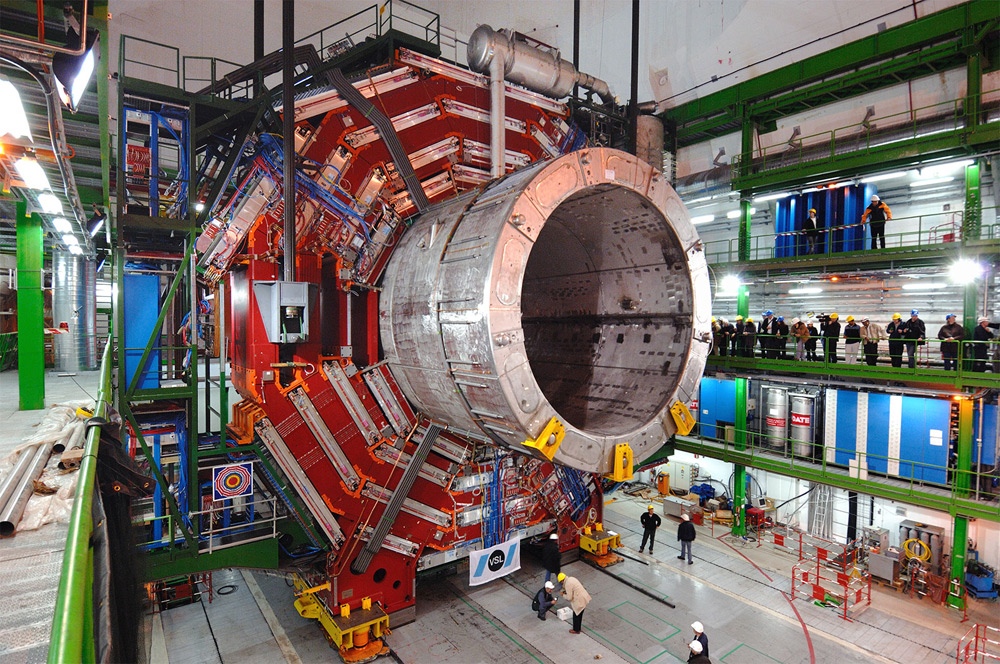
The Large Hadron Collider

When did you become interested in science?

Around the age of seventeen. I was always good at math, but at some point in my life I learned that there was this bigger thing out there called physics. I think the moment was probably when I got Stephen Hawking’s A Brief History of Time for my birthday. Until then, it never occurred to me that there was something called quantum mechanics, or that there were black holes. You don’t do any of the stuff in school, and it just blew my mind. It was utterly astonishing. And then on top of that, I learned from Hawking’s book that there existed this job – being a theoretical physicist. That had never occurred to me. The fact that you could just think about these things for a living was equally as mind blowing. I decided very early on that this is what I wanted to do, while also realizing that it was probably not where I was going to end up. Somehow, everybody gets diverted, so I thought that it was unlikely that I would become a theoretical physicist.
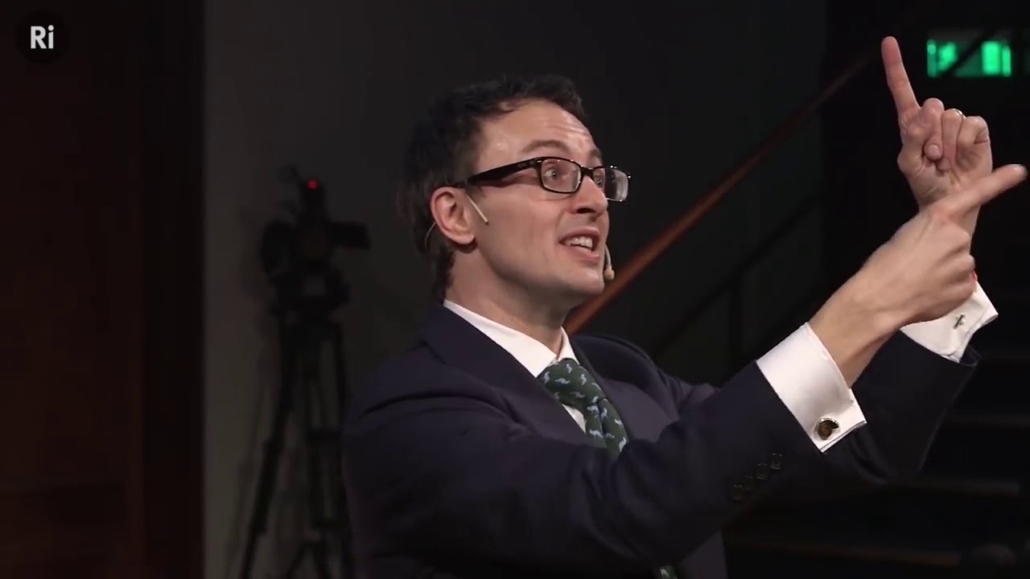
David Tong – Photo Courtesy Royal Institution

What did your family think of your career path?

My family did encourage me along the way, but always with a sense of bafflement. I don’t think they ever really understood what I was doing, but they always made it clear that they were extremely proud of me. Going to university, being the first person in the family to do that, there was a clear sense of support in that way. My wider family were genuinely baffled. At some point when I went on and did a PhD, my grandfather took me to one side and sort of let me know that one degree was okay, and maybe the Masters was pushing it, but why do a third degree in physics? He told me, “You know, your cousin…he’s a few years younger than you, but he’s got a good job. He’s laying carpet, he’s got his own van. It’s about time that you did something like this. When are you going to get your own van?” [Laughs.] His advice came from a sense of love. Actually, my cousin is doing tremendously well with his carpet business and is earning much more than I ever will. So my grandfather was probably right with his advice.


Was there a particular teacher or class that helped fuel your interest in science and mathematics?

I think everybody has wonderful teachers at one time or another during their schooling. Some of them I don’t think I was very nice to, to be honest. Maybe I’m exaggerating a little bit. Mrs. Salter was one of these teachers that was very strict, very stern. You really wouldn’t get a smile out of her, but she was an amazing math teacher.


Did you ever struggle in school?

I almost bombed physics. I had a year where we really didn’t have a physics teacher, and I was bombing physics because I didn’t understand it. She was a biology teacher, and she was saying stuff that didn’t make sense, so it wasn’t really working for me. I wasn’t alone in that respect. I think everybody in the class was bombing, so they decided to put in a proper physics teacher. He was an old Air Force guy with no hair and a very distinctive head, as if it had been molded by his Air Force helmet [laughs]. Mr. Hobbs. Again, very stern.  When he started explaining stuff, it just clicked. Suddenly it all started making sense.


You went to high school at Hazelwick. Please tell me about that.

Hazelwick is a Comprehensive School. This means it is a state school, also known as a commoner school here in the UK. It was run by a headteacher that sort of had delusions of grandeur. He thought it was more prestigious than it actually was, and yet I think that vision did turn it into something more prestigious. By that I mean it was a school which focused very much on academic excellence, even though it was the kind of school where that typically wasn’t the priority.


You’ve described yourself as a geek in high school. What were you into during this period in your life?

When I was a young teenager I was super nerdy. Super geeky. I was into computer games. I had friends, but I wore a big, thick-rimmed glasses, kind of like the ones I wear now, although they are a little cooler now than they were considered back then. At some point I started meeting friends who were way cooler than I was, and I slowly realized that there is a bit more to life than just sums.

I had a set of friends that were into really bad ‘80s metal bands. By the time I was 17 we were going up to London and going to all of these rock concerts. There were times when we were sleeping out because we had missed the last train home. We saw some great bands like Aerosmith, but we also saws some really terrible bands as well. Poison – why was I into the band Poison and their song Every Rose Has Its Thorn?
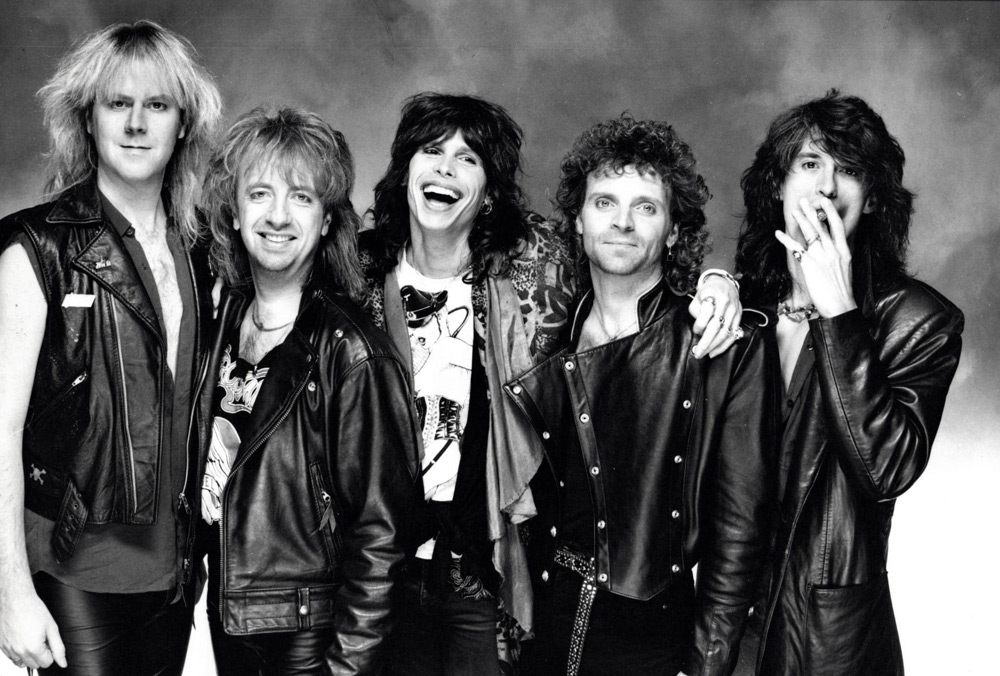
Aerosmith – One of the many bands David Tong saw in concert during the 1980s

Scientists are often stereotyped as humorless, arrogant, and introverted. That’s not you at all.

Oh yes, I would describe myself as humorless, arrogant, and introverted [laughs]! Have you seen The Big Bang Theory? I have to say that there is a little bit of Sheldon Cooper in all of us theoretical physicists. Maybe not quite that level of arrogance…it’s just under the surface, I think most of us are just hiding it well.


You received your Bachelor of Science in Mathematical Physics from the University of Nottingham. What did you do for fun?

I’m not sure I even remember extracurriculars. There was lots of doing what young people do, like clubbing, although looking back on it I’m not even sure I liked nightclubs. Looking back at it, there was lots of time spent in nightclubs and going out drinking. Maybe just a bit too much partying, to be honest. But I got a good education there.


Was Nottingham your first choice?

I applied to Oxford, but Oxford didn’t want me so I went to Nottingham. I got a good education there, that’s important to stress. England is a bit strange; if you are an undergraduate in England, it’s Oxford and Cambridge, and then everything else is considered a cut below. I guess the closest comparison in the United States is the Ivy League. And it’s extremely competitive here. I can see that now, as a professor at Cambridge. We get the best people from all around the world and put them together and challenge them. As a professor, I think that is fantastic. However, had I come here when I was 18, I think I would have struggled to no end. I wouldn’t have been able to compete with the students from the super fancy schools, or the brilliant minds excelling in the International Math Olympiad and International Physics Olympiad competitions. I think I would’ve probably ended up doing something else. So, somehow not getting into Oxford was a bit of good luck. It allowed me a little bit more time to learn physics, and to learn about myself as well.


From there it was on to Kings College, in London. Was the city a distraction?

Yes. I spent a year in London during the mid-90s, earning my Masters in Mathematics. Take any guy who’s 21 and put them in the middle of London, and they might not be doing as much work as they’d hoped. I had two years like this. Some years later I had a year in New York, where I had the best time outside of academics, and maybe my physics career didn’t quite progress as it should. I needed to refocus.


You earned your PhD in Theoretical Physics at the University of Wales, Swansea.

Swansea wasn’t considered a top rate university, but they had just hired a new Theoretical Physics Department, which consisted of maybe eight people, all very young, all super ambitious, and all super smart. It was the best place to be. There was no hierarchy. You’re going out with the professors for beer in the evening, or doing picnics down on the beach together…there was a real sense of everyone starting something exciting. I had a brilliant advisor who was doing cutting edge stuff. We were learning about string theory, which was really quite exciting.


In 1997 you spent two years as a visiting student at the University of Washington.

Seattle is a hell of a town. I think it was the first time I had left the UK in four or five years. I remember the plane flying in over the mountains, and I had never seen mountains in my life before. I didn’t have anywhere to stay when I arrived, so I stayed in a youth hostel between Christmas and New Year’s Day. What I’ve come to learn is that there are very few clear days in Seattle, but one of my first days there was the rare exception. I stepped out of that youth hostel and it was utterly clear and you could see the mountains of the Olympic Peninsula just silhouetted in the horizon. My word, it just took my breath away. It’s utterly spectacular. It was a wonderful time. The physics department was prestigious, and also you had many extraordinarily talented people, including David Thouless, who had recently won the Nobel Prize. For the first time I was immersed in an environment where I was learning physics in a way that I hadn’t before.


The next step was your postdocs. What’s that like?

The way it works is that you do your PhD, and then six years of postdocs. These are usually two or three year positions. It’s wonderful, really, because they allow you to do anything you want. They give you a desk and a computer, and they just say, “Do your best work.” The flipside is that in two or three years you’re going to be unemployed and you are going to have to find another job.


Where did you conduct your postdoctoral research?

I think I applied for 120 positions the first time around, basically everywhere on the planet that did my kind of theoretical physics. I got one offer. That one offer was in Mumbai, India, so that is where I went. After marrying my wife, moving to India ranks as possibly the greatest decision of my life. It’s amazing there, just a wonderful place. In terms of science, this was 20 years ago, and back then India wasn’t a country that could inject a lot of money into science. Fortunately for me, theoretical physics is dirt cheap – you need maybe a pen and paper and a computer – so that wasn’t really a barrier. They also had some of the best theoretical physicists in the world, so it was the perfect place to learn. And I was able to immerse myself into the country’s amazing culture, music, and food, while making the best friends. I don’t think I’ve ever laughed as much in my life as I did in that one year in India. It really was a spectacular experience.
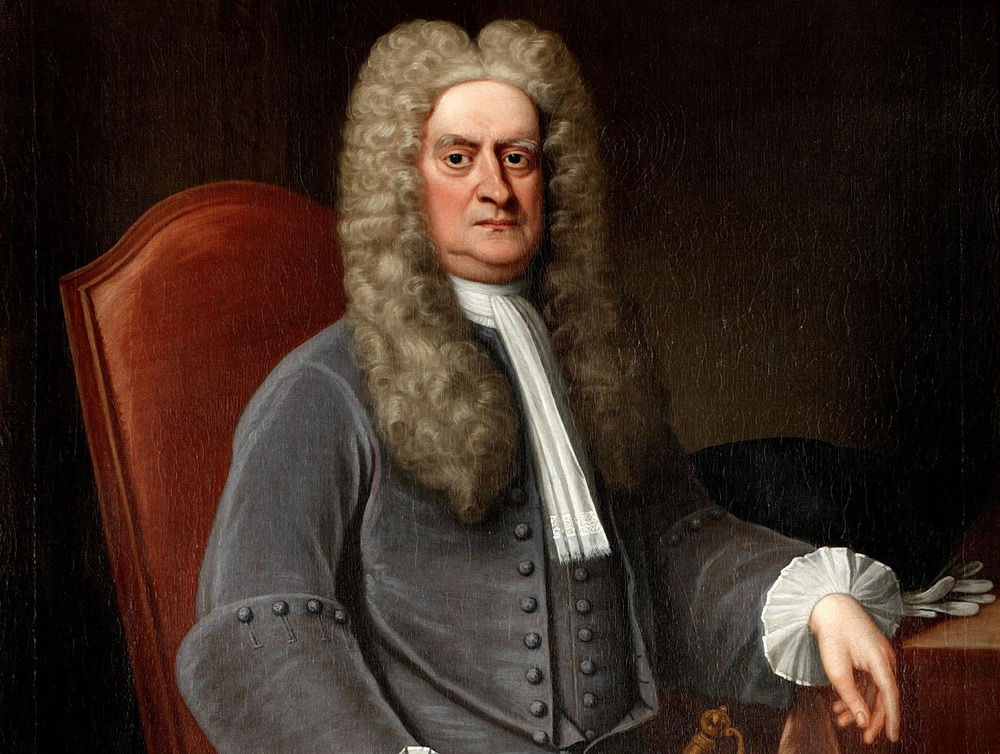
Sir Isaac Newton

Your research career includes stops at Columbia University, MIT, Stanford, and the University of Cambridge. That’s a pretty impressive portfolio.

Columbia University was fun. There was a time in the 1950s when the Physics Department at Columbia University was the center of the physics world, and every single name on the corridor had Nobel Prizes or was going to have Nobel Prizes. The fact that I was enjoying New York City – perhaps a little too much – meant that I probably didn’t get as much out of physics as I could have. I definitely enjoyed myself there. Then, two months later, I got this offer from MIT. That was really my dream job. I was seriously torn about whether I should stay in New York, which presumably meant dropping physics, or whether I should go to MIT. Well, MIT is usually ranked as the best physics department in the world, so I felt that the opportunity was too good to turn down.

In many ways, MIT was where I really learned to become a physicist. It was late in my life, I had my PhD, and I had done three years of postdocs. But moving there and seeing very smart people working incredibly hard and with unbridled passion – people that had won the Nobel Prize or who were on the cusp of winning it – that kind of turned my head. It made me realize that if you want to be good at physics, then you have to be very serious. I just looked around: If they are obviously smarter than me, and they are working much, much harder than me, then what chance do I have? I think that’s when I kind of grew up a little bit, to be honest. I realized that physics can be a fun hobby, but if you really want to make it into something more, then it requires a dedication. It was probably at MIT when I first really did that.


Let’s talk about the Royal Institution and the history there. Is the desk where you’ve lectured the same desk that Michael Faraday gave his famous Christmas lecture in 1856?

I make a comment on the YouTube video during my lecture, which says that if that is Faraday’s original desk, then he could have made life very easy for himself.


How so?

Because there’s a three-pin plug socket, and he could’ve just discovered electricity there [laughs]. I think the desk has been replaced at least once, but aside from the socket it’s an exact replica. It was probably replaced 150 or 200 years ago, and then modified to have electricity.


Some giants of science have lectured in that room, Michael Faraday and Humphry Davy among them. Please tell me about these two men.

Humphry Davy was the first Professor of Chemistry at the Royal Institution. He was a very prominent chemist who discovered at least four elements of the periodic table. He’s a pretty impressive guy. Faraday was his protégé. Surprisingly, Faraday was almost entirely uneducated. He left school at the age of 14 to become a bookbinder. He somehow pushed his way into the Royal institution to work as a lab tech for Humphry Davy, and from there pushed his way to become one of the greatest scientists of all time.
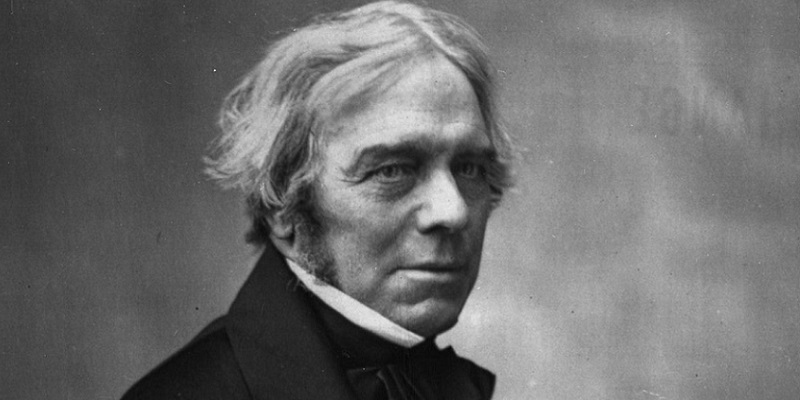
Michael Faraday

I’ve read where the lecture series was Faraday’s idea.

When Faraday was 17, he started this lecture series at the Royal Institution, called the Friday Evening Discourse. He gave most of the lectures for the first 40 years, and they used to be held every single week. Now they only do them once a month, but they have been running since the 1700s, so the tradition is still there.


And now we can add David Tong to the esteemed list of lecturers.

It was such an honor to receive the invitation and speak in this room. There are some traditions that aren’t clear from the YouTube video, one of which dates back to the early 1800s. The story goes that a guy named Charles Wheatstone was due to give a lecture, but he was a very nervous speaker, and, as it turns out, he was also a runner. Just before Wheatstone was supposed to turn up, he abandoned the lecture and Faraday had to stand in a give a lecture in his place. So to prevent this from happening, for the last 200+ years, they have a tradition of locking the speaker in a room for 10 minutes before the lecture.

Now, to say I was nervous to give this lecture was an understatement. To be locked in a room for 10 minutes before I was supposed to go on…my heart was beating through my chest! They finally came and let me out, and escorted me to the lecture hall entrance. There were two guys in uniform holding these big, fancy doors, and through the door I could almost hear somebody introducing me. Then they opened the door and in I went. The tradition is that you enter, but you don’t say, “Hello.” You don’t say, “Welcome.” You just start off with the lecture. So, it’s a very strange experience. I loved it. It was really a thrill to do that.
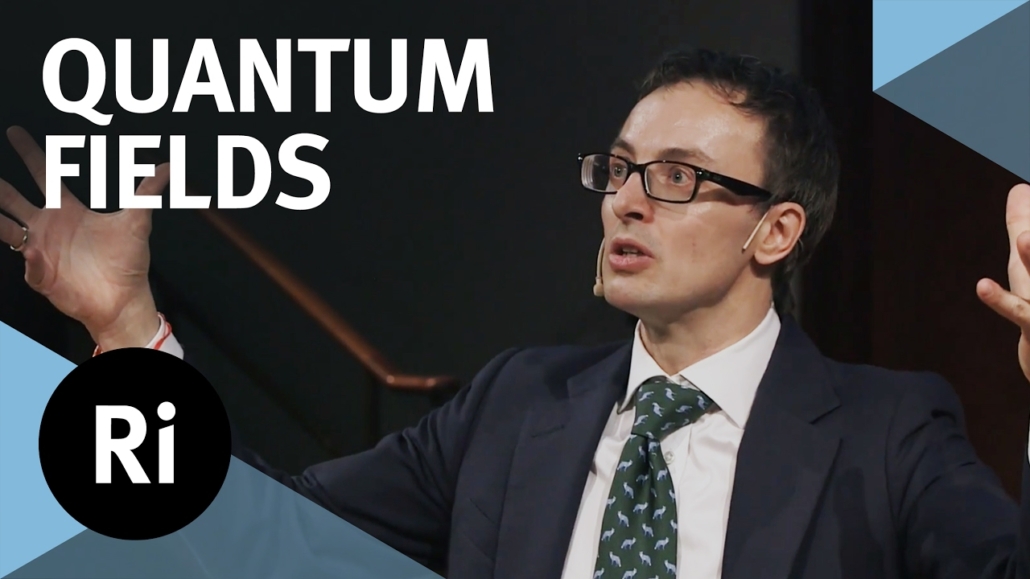
David Tong – Photo Courtesy Royal Institution

Today, you teach at Cambridge. That’s quite an honor.

I’m associated a with place called Trinity College, which is a college within Cambridge University. Let me say that history hangs heavy. I have two offices; my departmental office is very nice and modern, and I have blackboards everywhere. My other office is located in Trinity College. It’s in a building that was built in the 1600s, and it overlooks an astonishing court – if I crane my neck I can see where Newton lived, and beyond that, the spot where his apple tree was located. The people who have passed through Trinity include J.J. Thomson, who discovered the electron; Ernest Rutherford, who discovered the structure of the atom; and James Clark Maxwell, who discovered the theories of electricity and magnetism and who put Faraday’s work on proper mathematical footing. The list just goes on and on and on. At some point you just have to shrug and laugh it off, because these are not people whose footsteps you can fill. So, it’s a privilege, it’s an utter privilege.


Do you ever think about coming from such humble beginnings and being where you are today?

Almost on a daily basis. Certainly when I’m lecturing. Paul Dirac was a student here, and all he did was discover the equation for the electron – that, and win the Nobel Prize in Physics [laughs]. It is an astonishing story, really; Paul was staring into a fire when the equation for the electron suddenly came to him. It took him a long time to understand what it meant – about three years – and that’s when he realized that antimatter exists. He hadn’t just come up with the equation for the electron, but also an equation for another particle that had the same mass but had the opposite charge. Then, if the two particles with different charges came together, they would annihilate any burst of energy. Six months after he came to that realization, antimatter was discovered in experiments. To come up with something like that with just pure thought alone is mind-boggling.  I’m no Dirac, but when I get to stand up in our beautiful lecture halls and write his equation on the blackboards and explain to our students for the first time what it means…there is something very special in that.


As a theoretical physicist, what is your particular area of focus?

I work in something called quantum field theory. It’s a strange subject because it’s the basis of all of our laws of physics. Everything that we know at a fundamental level of the universe is written in terms of quantum field theory, and yet we really don’t understand it at all. My mathematician friends will tell me that I’m talking nonsense when I do quantum field theory, and that’s because they need to define things very rigorously. For them, they need to make sure that every step is very well-defined; in more than 70 years, nobody has managed to do that with quantum field theory.


Does your work require a certain amount of creativity?

As physicists, we are sort of flying by the seat of our pants. We are working with equations and mathematics that the mathematicians haven’t yet invented, so we are way ahead of them in that regard. If you take a wrong step with the math, you just get nonsense answers. You need intuition as a physicist to avoid taking the wrong step and still try to get the right answer. So yes, there is high level of creativity involved.


What drew you to the theoretical side of physics, as opposed to the experimental side?

That’s not a hard question to answer – if I pick up a screwdriver, I’m going to be using the wrong end every single time [laughs]. I’m hapless, absolutely hapless, when it comes to almost anything practical.


The discovery of the Higgs boson was such a big deal that it captured the imagination of millions worldwide.

This might sound a little bit strange, but I was a bit blasé about it. The science told us that it was there. That much was absolutely clear. We have this theory called the Standard Model that involves different forces and different particles interacting with each other, and yet there was this one missing ingredient, but it was such an integral part of the theory that it couldn’t not be there. I don’t think I’m alone in this. I think most physicists thought it was just absolutely obvious, and it would be nice when it was finally discovered, but that we weren’t really going to learn anything. And then the Higgs boson was discovered, and I was just blown away.

It’s just astonishing to think that scientists could be so sure of the Higgs boson’s existence with just with pen and paper. Then, theorize that if you build a machine that costs $10 billion – the greatest engineering feat ever – and you smash these particles together at unprecedented energies, you’re going to see a bump that has particular properties in some graph, proving its existence. And yet, that’s what happened. There’s something really astonishing about that achievement. I sort of felt something similar about the gravitational wave discovery several years ago. It’s obvious that if you take the Einstein equation, gravitational waves exist. It’s far from obvious that you can build a machine to actually detect them. So again, I was a bit blasé. You take for granted that they will be detected at some point in time. But then it happens, and you’re reminded that this is such an incredible moment. We’re talking about some of mankind’s greatest scientific and technological achievements.

The Large Hadron Collider – CERN, Geneva, Switzerland

Do you think the recent discovery of neutrino oscillations challenges the Standard Model?

It challenges it, but I think in a fairly minor way. It’s not too difficult to take the Standard Model and just add a mass for the neutrino. This was not a big surprise. It’s also a slightly different discovery in the sense that it took decades, with hints from solar neutrinos and more hints from nuclear reactor neutrinos. People painstakingly put this together, and then it was finally proven by the SNO experiment that Art McDonald and others were on. It wasn’t like the discovery of the Higgs boson, or the discovery of gravitational waves, where there was a pop culture moment and a press conference by the mainstream media to announce it. It was something that built up much more slowly in the consciousness of physicists. Having said that, it is true that adding the mass for neutrinos to the Standard Model opens new questions, as discoveries always do. It opens up deeper questions about where the mass comes from, so it’s certainly one of the more interesting questions in science today. I’m one of these people who get excited about everything in physics, so it was a big deal to me.


Are you surprised by how well the Standard Model has held up?

We all thought that the discovery of the Higgs boson would sort of open the door to the next level of discoveries to whatever lies beyond the standard model, whatever the next level of nature is. We have lots of ideas. We have really fancy, zany ideas about things like supersymmetry or extra dimensions in the universe, all of these great things that we were hoping the Large Hadron Collider would discover. None of this came true. The Large Hadron Collider has done extraordinarily well since the discovery of the Higgs boson. It has done millions of experiments, and every single one of them agrees perfectly with the Standard Model, which should be cause for celebration because it’s taken us 70 years to develop the Standard Model. And now that we’ve got it, we can calculate anything we like.
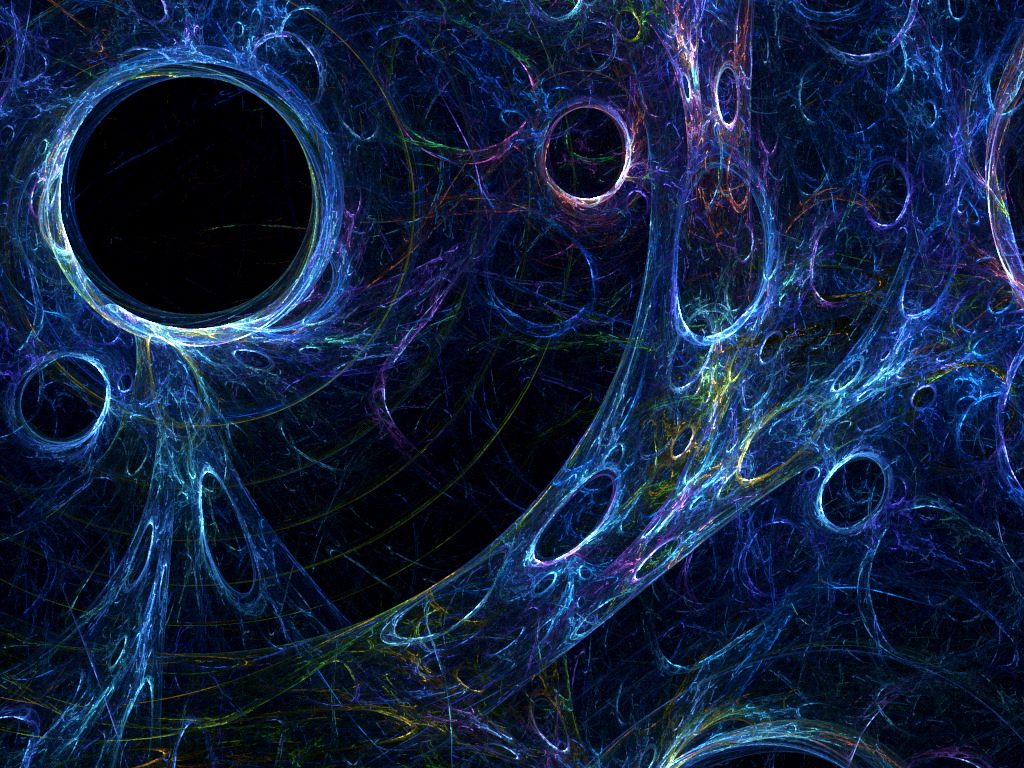
Artistic representation of dark matter. Image credits: tchaikovsky2, Deviant Art

Why would breaking the Standard Model be a win for science?

We do these extremely complicated experiments and everything agrees perfectly. That in itself sounds like a win, but science is all about pushing the envelope. Everybody wants to prove Einstein wrong, because they want to be the next Einstein. That’s being a little bit facetious, but the point is, it’s when your theory breaks down that you’ve managed to make the next big step and understand things deeper. The Standard Model hasn’t broken down. The entire scientific community doesn’t understand why it works as well as it does. There are so many questions. Why isn’t it cracking yet? Why aren’t we seeing gaps in the Standard Model?


Do you have a theory about that?

Everybody in the scientific community has their own approach. I have one, which is not the norm, and certainly not what most people are doing. As I mentioned before, there are lots of things we don’t understand about quantum field theory. Some are things that you can just brush under the rug and not worry about. With respect to the Standard Model, I think it might be time to lift up the rug. I think we need to start asking slightly harder questions about what quantum field theory means. What is it doing? Are there patterns there that we’ve missed? I think it’s time to take start exploring very well-explored theories in completely different ways.


What is the one thing today that excites you the most about physics?

Five percent of the energy in our universe is made up of stuff in the periodic table…things that are made of atoms, such as you and me, the stars in the universe, the dust in the universe, planets…stuff that we understand, basically. The other 95% is completely unknown. Still, we know it’s there, and we know that it falls into two different categories: Dark matter and dark energy. While they have similar names, they really have very little to do with each other. I’m not working on either of these things today because I don’t have any good ideas. In fact, no one really has any good ideas. But that’s the exciting thing about dark matter and dark energy.


That’s a big percentage of our universe.

About 25% of the universe is made up of dark matter. Dark matter is super exciting and interesting, but I’m not sure it’s that baffling, conceptually. Dark matter is some invisible particle that we haven’t made here on earth. We know it’s there, floating around in space. In fact, the galaxies that we see likely exist within dark matter halos. It would be brilliant to understand this better, but at the end of the day it’s almost certainly some sort of invisible particle.

The other 70% of the universe is much more baffling. The other 70% is made up of dark energy, which is an antigravitational force causing everything in the universe to repel everything else. The effect is that the universe is expanding at an accelerating rate over time, rather than slowing down. That’s because of this antigravitational force that we call dark energy, which is making everything fly apart at an increasingly fast rate. What the hell is that? That is just weird.
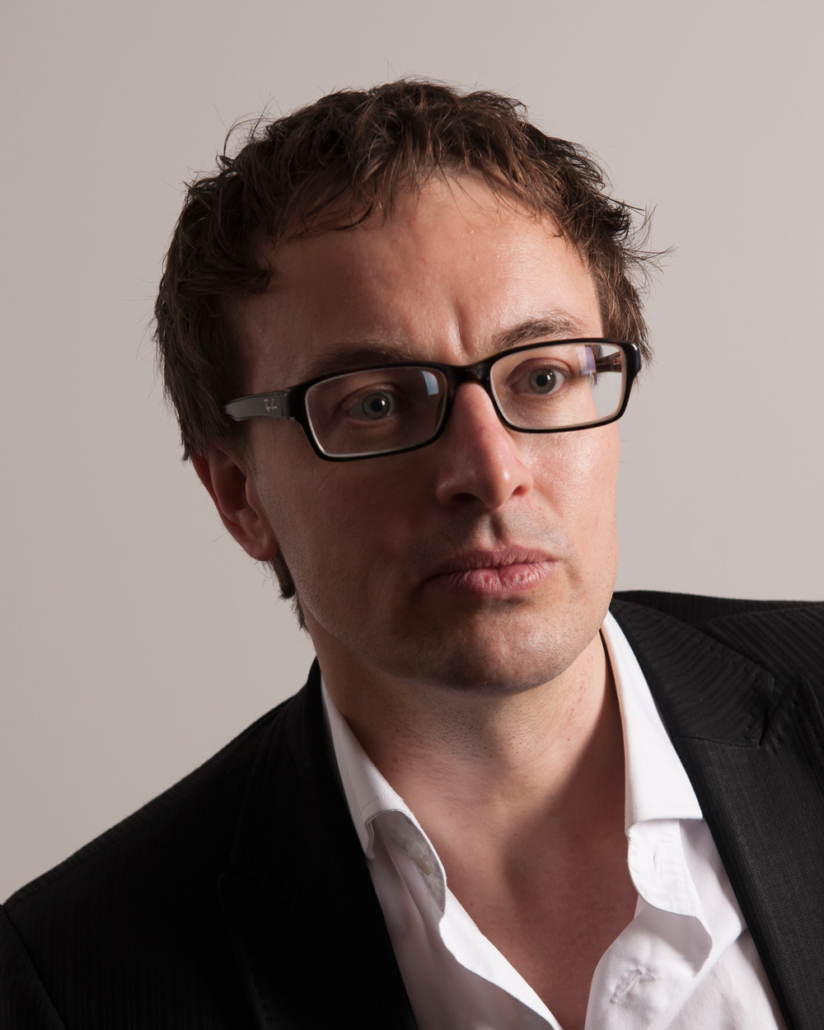
Photo Courtesy David Tong

Final Question: You’ve achieved great success in your life. If you could offer one piece of advice, what would that be?

I don’t think theoretical physicists should be giving advice on life [laughs]. That’s not where we are the experts. But, I can give advice on pursuing science. Do it if you love it, because it’s a fairly miserable experience. You spend most of your time just being utterly stuck and utterly confused, and not having anywhere to turn to find the answers. There has to be a passion for the big picture, and yet you must get a level of joy from finding the very tiny, infinitesimal answers, and also from making infinitesimal progress. The little things have to be bigger than the misery.
Written By: Michael D. McClellan |

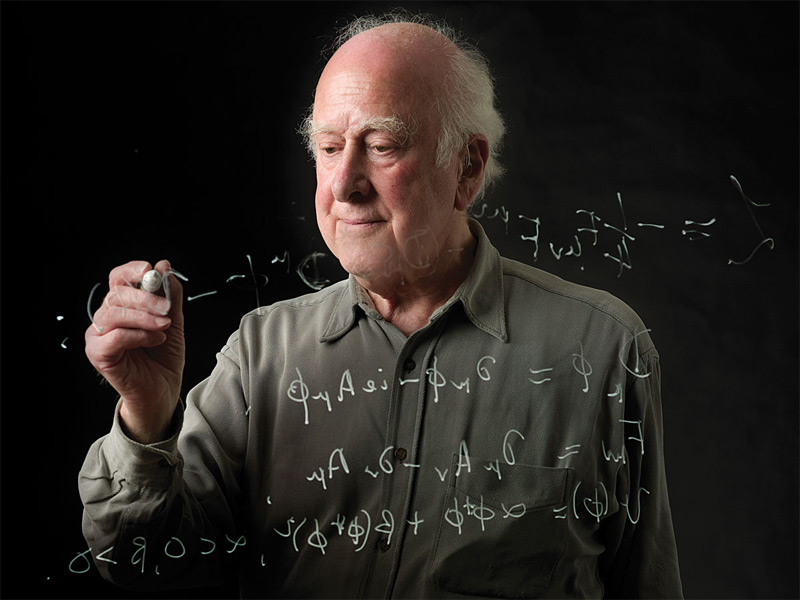
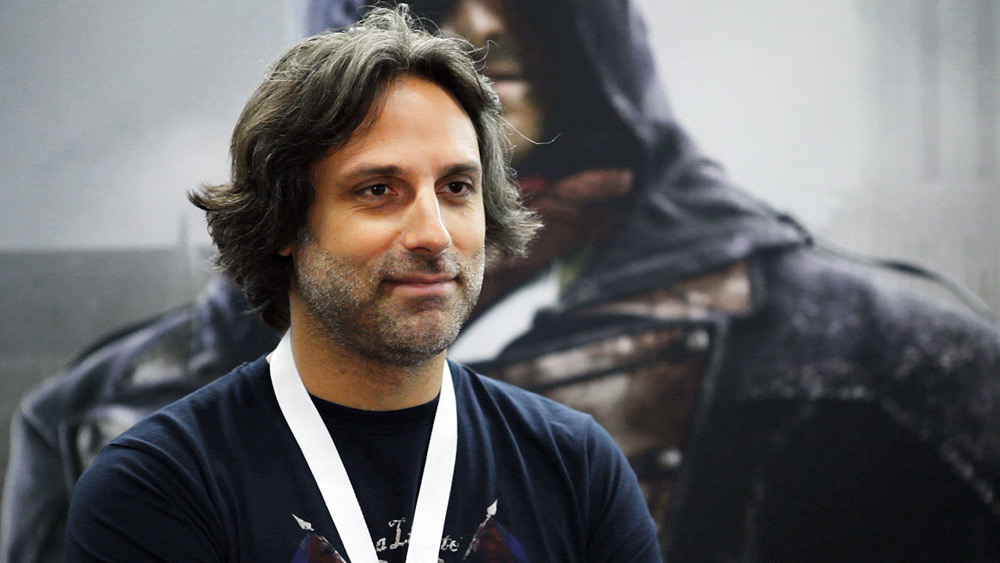
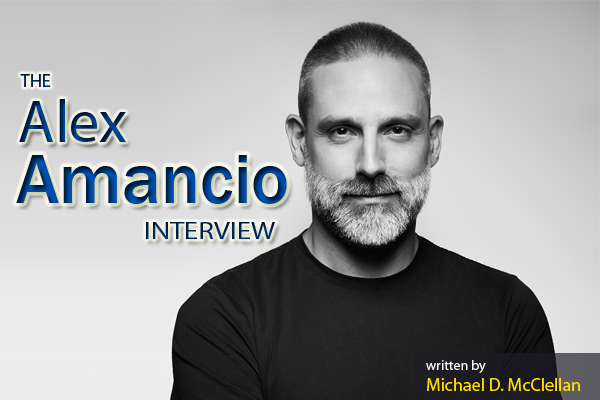
At first blush, Peter Higgs and Alex Amancio have nothing in common. Higgs, the theoretical physicist who, during the 1960s, proposed the existence of the so-called “God Particle,” and later won the 2013 Nobel Prize after experiments at the Large Hadron Collider in Geneva, Switzerland, proved it true, owns neither a TV nor a mobile phone, and was 80 years old before he acquired a computer. Amancio, now the Chief Creative Officer and Founder at Reflector Entertainment, is one of the hottest guys in the entertainment universe, having served as creative director of the two most successful Assassin’s Creed video games, introduced the technology that brought Madonna to life in her groundbreaking, augmented reality performance at the 2019 Billboard Music Awards, and today is at the forefront of a revolution that is bending, stretching, twisting and upending the worlds of entertainment, pop culture, and tech. Common denominators? Is that even possible? Higgs has spent his life in pursuit of answers to some of physics’ most burning questions: Why did some particles acquire a mass just seconds after the Big Bang, allowing them to clump and coalesce into matter, forming things like stars, planets, and people? Why has our universe stuck around for billions of years, when it should have been a fleeting fireball, gone in an instant? Amancio’s universe, on the other hand, exists as an arras of pixels, with whole worlds created by teams of coders and right-brained creatives, all for the enjoyment of a rapidly growing fan base. It would seem that there’s little, if anything, connecting them.

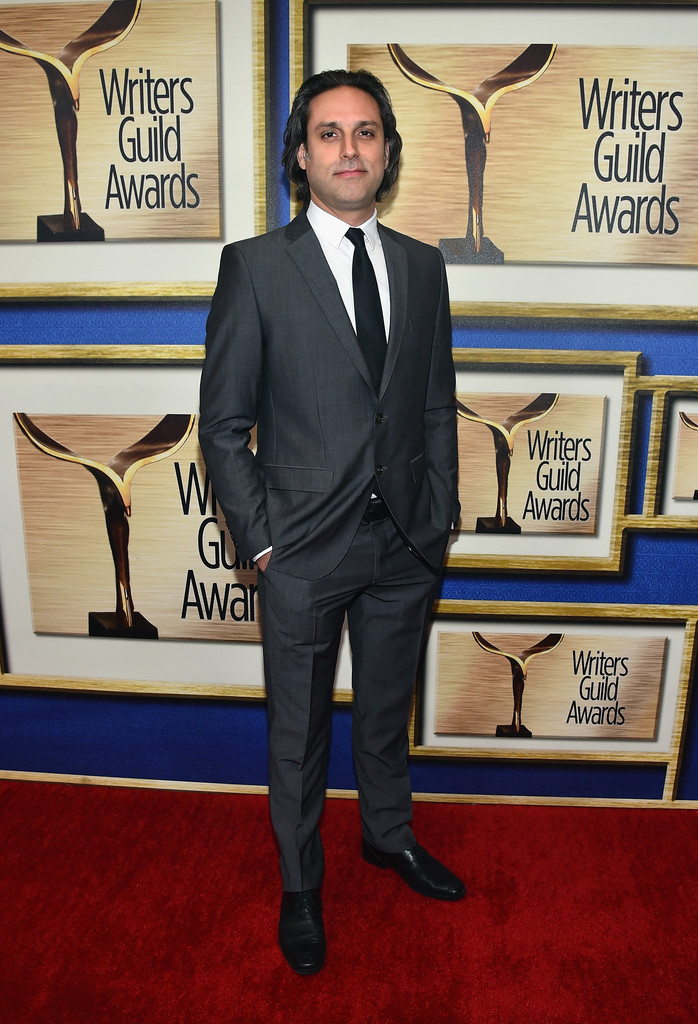
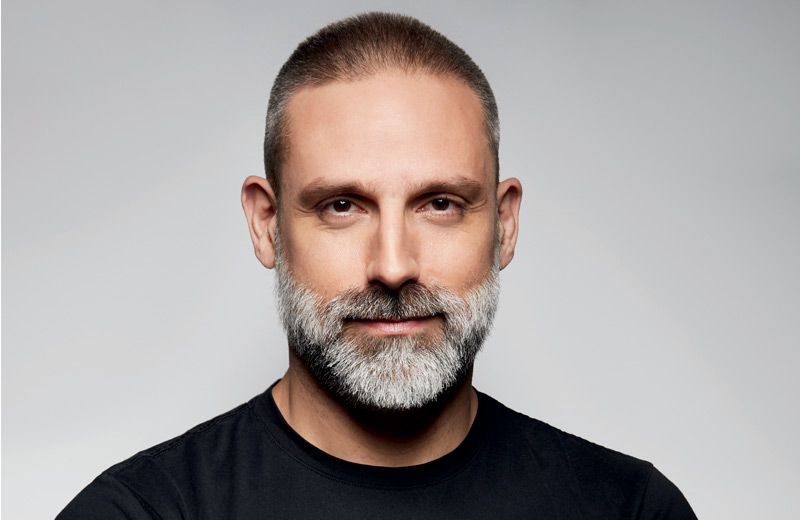
Alex Amancio

And yet the two men are cut from the same cloth, kindred spirits if you will, one identifying the missing particle in the Standard Model, the other reshaping entertainment’s future with something called “Storyworlds” – an ever-expanding universe that tells stories across multiple platforms or media. Both deal in the currency of creation: Higgs for proving the existence of the omnipresent Higgs field, through which all mass is created; Amancio for interweaving narratives and characters across films, video games, novels, podcasts, comics, and beyond. Both, it turns out, are also modest to a fault. In fact, Britain’s most cherished scientist wasn’t home to take the call on the day of the Nobel announcement, and when a former neighbor stopped to congratulate him in the street, his first response was a puzzled, “What prize?” Embarrassed to be singled out from so many other deserving candidates, Higgs set off to Stockholm to receive his award, blinking in polite bewilderment as his admirers demanded a long-overdue knighthood. The Portuguese-born, Montréal-raised Amancio has been twice nominated by the prestigious Writer’s Guild of America, both times for his storytelling, and yet he’s far more comfortable talking about Unknown 9, Reflector’s maiden Storyworld, than anything to do with Alexandre Amancio.

Peter Higgs

“We’ve launched a novel trilogy, a comic book series, and a podcast for Unknown 9,” Amancio says. “We’re also developing a triple A video game, a television series, and loads of digital content. It’s an exciting time at Reflector.”

At some point in the not too distant future, the humble paths of Peter Higgs and Alex Amancio are destined to converge, and in a very real way. Quantum computing remains in its formative stages, but its potential to process data exponentially faster than traditional computers could bring about seismic shifts in everything from pharmaceutical research (Biogen has explored quantum-enabled molecule modeling) to finance (Citi and Goldman Sachs both invest in quantum). Naturally, gamers want to know if that outsize computing muscle will transform games, too.

“Quantum computing could certainly become the next frontier,” Amancio says. “There’s no question it has the potential to reshape the entire gaming experience, which makes it an exciting time to be in this business.”

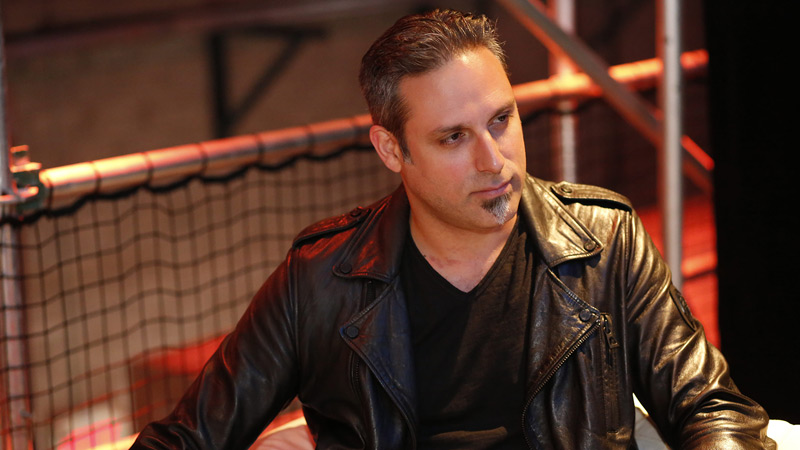
Alex Amancio

Amancio and his team at Reflector will be well-positioned to leverage these new advances. The Storyworlds they create are each a unique intellectual property, each with unique entry points into the IP’s universe. This means that your favorite character might be the protagonist in the film, while playing a complimentary role in the video game – the stories are independent, but if you experience them all, they tell a broader narrative that expands the overall mythology. It’s up to you to decide the path that you take.

“The concept of transmedia has been around for quite a while,” he says, “but I don’t think anyone has done it quite the way that we do it.”

Take Unknown 9, for example.

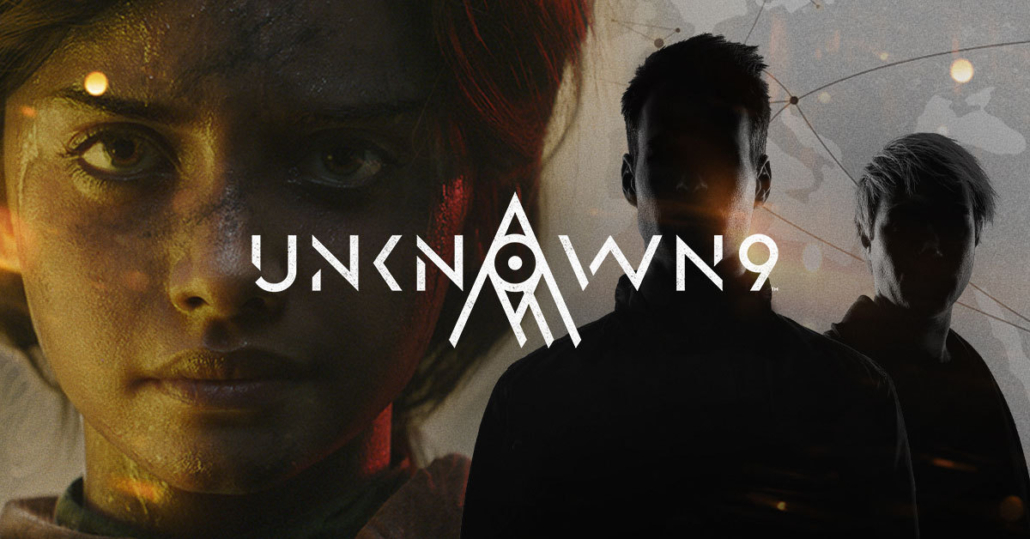
Unknown 9
Courtesy Reflector Entertainment

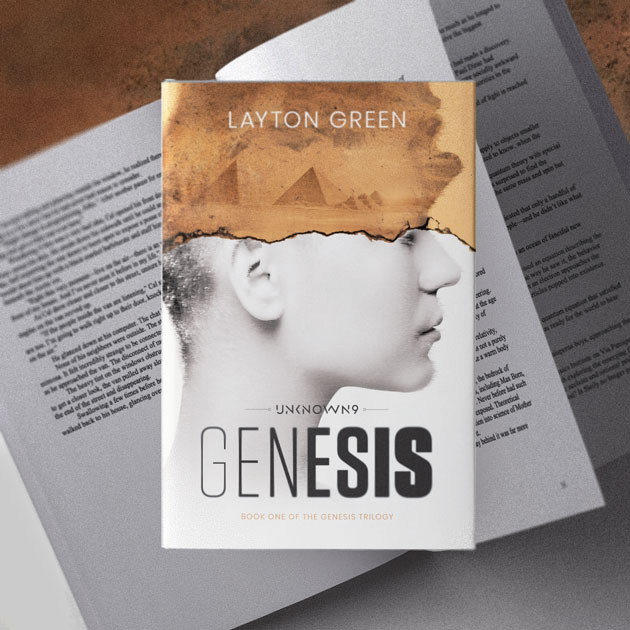
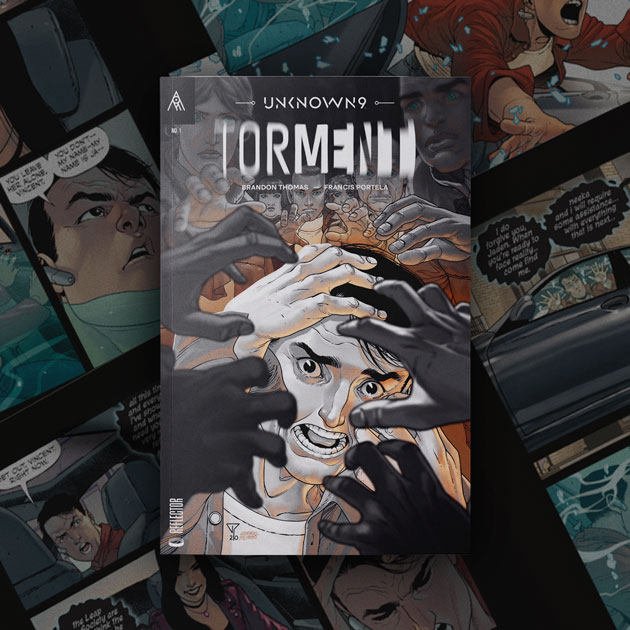
Your entry point might be Unknown 9: Chapters, an immersive set of website puzzles in which players go through The Leap Year Society’s recruitment protocol to become Quaestors. Or you might decide to start with Unknown 9: Genesis, the first book in a novel trilogy by bestselling author Layton Green. Or you could opt for the comic book series, Unknown 9: Torment, following Jaden Crowe as he is inducted into a mysterious society and discovers his unbelievable destiny. Other entry points include podcasts, the upcoming video game, a feature film…all of it designed to be consumed in any order, a la carte with you deciding how far you want to go.

“That’s the beauty of IP,” Amancio says. “Every entry point brings with it a different perspective, enriching the overall story. If you consume only one platform – let’s say you just watch the film or you play the console game – you feel satisfied, because each is a closed loop. You have a beginning, a middle, and an ending. You experience it, and you complete the whole narrative. But for those who want more, how do you create narratives that enrich the fan experience? The idea of Storyworlds is to craft narratives where each one gives you a peek into a completely different perspective.”

~  ~  ~

If anyone is going to deliver on challenging the status quo, it’s Alexandre Amancio.

Just as Peter Higgs challenged the Standard Model with the discovery of the Higgs boson, Amancio is challenging traditional channels for consuming content. Instead of big companies pushing the content that people consume, such as on TV or in the theatre, for example, Storyworlds interweave a myriad of different producers around a single IP. The result is a democratized platform that is anything but cookie cutter.

“The world has shifted, right?” Amancio asks rhetorically. “Look at the movie industry, even before COVID hit. They were already looking back and asking, ‘Where are the fans? Where are the lines at theaters?’ People aren’t consuming film anymore, at least not in the traditional sense.”
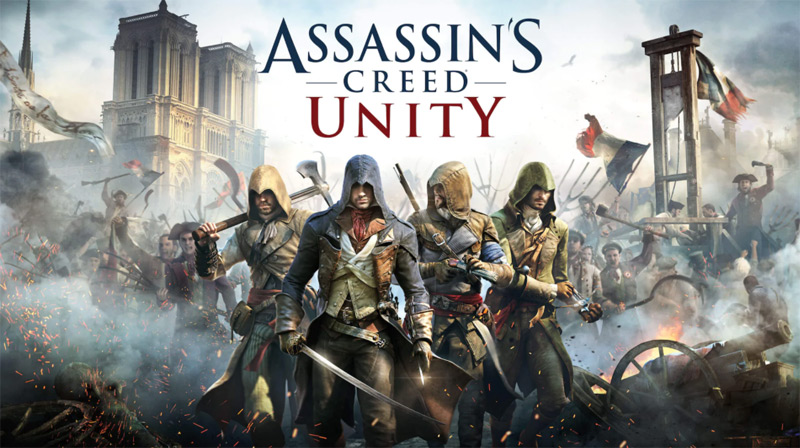
Amancio’s Storyworld epiphany has its genesis in his work at Ubisoft, where he helmed two of the most successful titles in the Assassin’s Creed universe: Assassin’s Creed: Revelations, and Assassin’s Creed Unity. Those experiences convinced him that developing an IP and delivering its content across multiple platforms was the way to go.

Courtesy Ubisoft

Consider Unity.

You play as Arno, a native Frenchman who was born in Versailles to an Assassin father. You’re dropped into Paris, circa 1798, during the French Revolution. The streets are filthy with mud and blood, the air thick with gunpowder smoke. The citizens are starving. The guillotines are doing a brisk business. You play to expose the true powers behind the Revolution. You explore the city, and scale towers to unlock missions. There’s plenty of jumping and stabbing to be had.

When you have a game this rich, it begs for other story streams. Amancio took this with him to Reflector, hell-bent on creating ubiquitous IPs that run the gamut, from social media to gaming consoles to streaming services and back again. Books. Graphic novels. Podcasts. RPG’s. Anime.

Unknown 9 is just the beginning.

Amancio and his Reflector team have other Storyworlds in the works.

Like Peter Higgs, Godfather of the God Particle, it’s all about the creation.

Let’s walk it back to the beginning. Please tell me a little about your childhood – where did you get your insatiable curiosity?

I was actually born in Portugal, which is a southern European country on the Iberian Peninsula, bordering Spain. I didn’t live there long, because my parents moved to Montréal, Canada, when I was a little over three years old. I grew up in a French-speaking city, but my first language is Portuguese. I had to learn French for the first time when I was introduced to school – I actually still remember being 5 years old and not understanding a word that the people were saying, so I had to pick it up as I went. My dad was always of the mindset that we would speak Portuguese at home. That way I would be able to keep that language. He knew that I would be learning French at school, so the other decision that he made was that we would watch TV and movies in English. I think that having been plunged into a lot of different languages and a lot of different cultures at a very early age is probably what formatted my brain the way that it is now. I feel like it helped to develop my creative side. I like solving problems, I like coming up with stuff, and I like to learn. So a very healthy curiosity is part of my DNA. I can’t even imagine not learning. So yes, I really think that being plunged into the unknown from a very young age is what probably what drove me to become this way.

Alex Amancio

You are an awarding-winning writer and director of the iconic Assassin’s Creed video game series. Please tell me about your first major effort, Assassin’s Creed: Revelations.

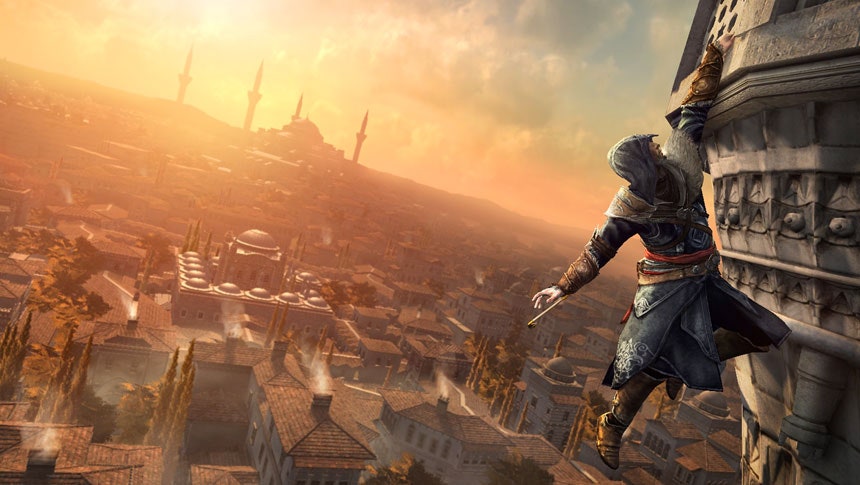
Both of these projects were extremely important in my creative path. Assassin’s Creed: Revelations was my first project as Creative Director, and it was released in November, 2011. This title was the first where I was really helming the creative vision on the project. It was quite a tough one because I had two major challenges: First, we had to create a brand-new Assassin’s Creed team. That was very challenging in itself. Then, we had to deliver this game in a record amount of time. I think we delivered it in 10 months. What I learned from that experience are three things: You need to have a clear vision from the start; you need to believe in that vision enough to be able to hold onto it no matter what the obstacles in your path; and you need to be smart enough to be flexible in the sense that, there may be times where adapting the vision might get you closer to the final vision than if you had held onto every detail. So, by having that sort of rigidity for certain things, and as well as having the flexibility to deal with problems as they arise, we were able to move forward with belief that what we had from seed was good. All of that stuff I absorbed in that project on the fly. It was really a trial by fire.

From a storytelling standpoint, Revelations was about an aging hero who, for the first time in his life, had to take a step back and look at his life. What was he actually fighting for? What does he want his life to be about? Should he continue on this course, or should he just live for himself? It was also an amazing opportunity to connect two of the most iconic heroes of the franchise –Altaïr Ibn-La’Ahad, who is the protagonist in the first game, and Ezio, who ended up becoming the star of the franchise. It was exciting to have them both in the same game, and to be able to create a parallel or a mirror with both of their lives, with two ways that a hero’s life could potentially go. So, Revelations was a very cool project for all of those reasons. I’m very proud of how we were able to overcome all of the challenges, and also proud of the depth of the narrative that we were able to craft.

Assassin’s Creed: Revelations
Courtesy Ubisoft

Let’s fast-forward to the fall of 2014, and the release of Assassin’s Creed Unity.

Assassins Creed Unity represented another significant challenge, but we had one big advantage that we didn’t have with Revelations, and that was a lot of time. We also had the biggest team that we had ever assembled for a project. It was about 1,000 people in total. We had 10 studios collaborating together on one single project across several different countries and three continents, from Asia to Europe to America, so it was a very ambitious game.


Unity represented a quantum leap in gaming.

Unity was also based on the AnvilNext 2.0 game engine. Because Unity was the first next-generation title that we were going to deliver using this engine, it was all about how much could we push this new technology – and not just the visuals. We wanted to see what kind of storytelling mechanisms we could push, using the raw power that was suddenly available to us. So we created the biggest city that we had ever created for an Assassin’s Creed game. It was actually to scale; in the previous Assassin’s Creed titles, the houses were actually smaller than in reality. So, if you were able to go into a house, you would immediately realize that things like doorways would be much smaller. For Unity, almost all of the houses could be entered, so they had to be full-scale. We essentially recreated Paris, not as it is today, but as it was in the Middle Ages, and we did it to scale.

The characters were the next logical step in our development process. The thought being, if we create a city that looks and feels more realistic than ever, then that city is going to have a jarring effect if it feels empty. Up until that point, we couldn’t typically have any more than 10-20 characters in a game. We developed a tech that allowed us to have more than 10,000 people, which, for the first time, really allowed us to populate a city as it should be populated. The beauty of these characters is that, if you interact with them, they react like real characters. That advancement really contributed to making the city feel alive and real.


You’ve been twice nominated by the prestigious Writer’s Guild of America.

When I look at the other people that were nominated in that category, these are people that I admire greatly, and whose work I also admire. Just being nominated, and being in the same category as them, is a tremendous honor for me. I’m quite humbled by it, actually.

Genesis – One of many entry points into the Unknown 9 universe
Courtesy Reflector Entertainment

You’re a born storyteller.

Storytelling is something that I’ve been passionate about my entire life. I talk about technology and all of that stuff, but in reality, these are all just levers. They are devices that allow us to tell stories. Finding new and innovative ways of telling stories is what I’m in this for, and gaming is the perfect marriage of technology and storytelling. It’s what stimulates me. It’s what motivates me.

It’s an exciting time, because I think that video games open the door to a completely new kind of storytelling. When the film industry was in its nascent stages, it used a lot of the language and mechanics of theater. Then, we started understanding how film could be editing, allowing us to jump cut, flashback, and change locations very quickly. That sort of vernacular was born of experience with the medium. It took years and decades to master. In the video game world, we’re still in that nascent stage. We’re still discovering, every day, every year, new ways to push the boundaries of storytelling within those interactive universes that we create.


From what I’ve ready, you’re into theoretical physics.

Yes [laughs]. My initial path was science. Physics has always been my passion, and I think theoretical physics is as close to creation as science can get. If you look at those Prince Theories in terms of how the very small things in our universe work, it seems to be subjective in the sense that the universe seems to react to the observer. When you start getting into that stuff, you really start getting very close to how video games function. Maybe that’s part of the subconscious reason that I gravitated towards video games.

Torment – One of many entry points into the Unknown 9 universe
Courtesy Reflector Entertainment

You’re now the CEO Reflector Entertainment. Storyworlds are at the heart of your new company.

Reflector was born of certain ideas that I started having when I was at Ubisoft. One thing I realized while working on the Assassin’s Creed universe was that the mythology we were building, and the world that we were creating, transcended the video game medium. So, while I was helming both Revelations and Unity,a lot of my time and attention was focused on the novels and the comic books that were being produced. This work was being done with an internal team that we called the IP Team. As we fleshed these out, it was really important to me that the stories weren’t just redundant stories, or simply an adaptation of the video game story. We wanted stories that transcended the video game – maybe from a different angle, or a different character’s perspective, or maybe even a portion of the story that wasn’t necessarily told within the game. So, instead of having the typical ancillary novels for Assassin’s Creed: Revelations, we actually had two novels that, instead of being about the story of the game, were actually prequels. They were the stories of the two main protagonists, and how they got to where they are in the game. In doing so, the novels gave audiences a glimpse into the psyche of these characters. They also fleshed out their backstories, and dived into other important characters that gravitated around them. It was the same thing when it came to the comic books. They weren’t about the game, they were about different things. They were connected to the game through some artifacts, or some side characters. I really felt that this was, in itself, a new form of storytelling.

Storyworld Development
Courtesy Reflector Entertainment

The storytelling landscape has changed. Would you consider this a paradigm shift?

In a very real sense, yes. I looked at what people were doing 30 years ago. They used to say, “‘I’m a film fan,’ or, ‘I’m a novel fan,’ or, ‘I’m a comic book fan.’ But today, people are far more likely to compare themselves to an IP. Today, they’re a Harry Potter fan. Or a Star Wars fan. Or a Lord of the Rings fan. Which means that they consume that world through multiple platforms – through films, through books, through comics, and through video games.


Does Reflector fill a niche, or is it leading the way in this bigger transformation?

When I started Reflector, I felt that, even though consumers have the evolved towards this way of consuming content, companies had not. Companies still viewed themselves through the lens of what they sold. I felt that this was, in a lot of ways, very similar to the mistake made by Kodak, where Kodak went from being the first, most valuable company in the world in terms of film and pictures, to being bankrupt within a very short amount of time. The reason this happened was because of digital photography. Digital photography essentially made film obsolete. The irony is that digital photography was actually developed by the R&D department at Kodak. They patented the chip that is actually able to transfer images into digital pictures, but then they sold it off. Why? Because it wasn’t part of their main revenue stream, which was film-based cameras. This was the 1970s, when 85% of the cameras purchased were Kodak cameras, and 90% of the film purchased was Kodak film. If Kodak had chosen to identify themselves not as a film company, but as an image company, or a memory company, they would likely still be the 800-pound gorilla in an industry that today is dominated by others. If they had evolved toward digital photography, they might also be making all the stuff that we take for granted today, things like Photoshop, smartphone cameras, and the like.


It seems like a common mistake that doom a lot of companies.

The same thing happened to Blockbuster. Blockbuster should’ve been about getting entertainment to people wherever they were, but they forgot about that. Instead, they were all about brick-and-mortar stores that rented out cassettes and DVDs. The same thing happened to them. Had they aligned themselves properly, they could have become Netflix.


Do you see the same potential for this cycle repeating itself in the entertainment space?

Very much so. Who knows if the traditional film industry, which has focused on movies being released to theatres first, is going to survive COVID, much less the transformation it has been going through in the past decade. The one thing I know for sure is that people are always going to consume audio and visual experiences. So, if companies sort of view themselves as producers of media, if they see themselves as creators of worlds and characters, then maybe that would open new doors.

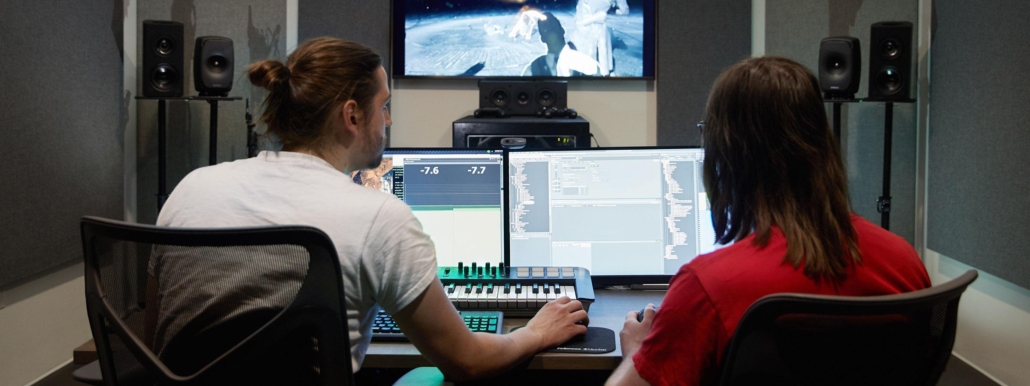
Reflector values small teams of passionate individuals
Courtesy Reflector Entertainment

Reflector is platform agnostic, with something you call “Storyworlds” at the center. Not the other way around, where channels drive the creativity.

That is essentially the concept we developed while working on Assassin’s Creed, and the motivating factor that led me to create Reflector Entertainment. Reflector is precisely as you describe: It’s a company that creates worlds that we call Storyworlds, which we then deploy them across media. One product is no more important than the other. Of course we have our revenue streams, and we have certain products and certain media that we don’t think will make money, but we still believe that these  are good vectors for telling stories, and that they enrich the overall IP. These products bring value to the universe that we are creating, whether or not they make money.


What’s going on at Reflector right now?

We’re busy creating our very first Storyworld, which is called Unknown 9. Unknown 9 is a very ambitious universe that we’ve crafted, which is something that I’ve built around an old East Indian mythology. Right now we are busy creating a novel trilogy, a comic book series, a podcast series, and a video game. We’re also developing a film, as well as loads of digital content. And we’re developing an entire digital platform that will host it all.


Please tell me about the teams that you have at Reflector. Are teams critical to the success of these Storyworlds?

That’s an excellent question, because what we do is ultimately all about the people. IP is all about ideas, right? Reflector is built on what comes out of people’s minds. The critical thing is finding the best talent all over the world. I think that one thing that was really important for Reflector from the beginning is that, yeah, we’re based in Montréal, and we have an amazing talent pool of people that are expert video game developers, but we are not limited to that, right? We will find the best possible collaborators, wherever they are. For this reason, we do work with a lot of people that are remote. For example, some of our authors are in Europe, and some of them are in the United States, so the idea of finding the right collaborators is the most critical element.

Another important part of team development is creating a healthy mix of veterans and up-and-coming talent. You’re reassured by bringing in established talent with proven track records, people that you can judge by their work and the projects that they’ve already been through. The newcomers bring fresh ideas and perspectives. It allows us to counterbalance our experienced talent that with the young, up-and-comers that still have a lot of stars in their eyes and think that they can do the impossible. I think it not only rejuvenates the veterans, it also benefits the newcomers, because they benefit from working with veterans who have years of knowledge and expertise. It’s a very symbiotic relationship. This also helps ensure an amazing level of diversity.

Teamwork is essential to success at Reflector
Courtesy Reflector Entertainment

How much creative freedom are they given?

Once you get the right people, you can give them a sandbox and let them create. You have to make sure that everything still fits together, and that everything still lines up, but you have to give people the creative freedom that will allow them to shine. When people feel that they’re trusted and have the freedom to express themselves, I think that they will do their best work and transcend even what they thought was possible. For those reasons, trust, creativity, and respect are the pillars that make up Reflector.


Do you see yourself as the conductor of an orchestra?

I think that that is a great analogy. An orchestra has its sections – you have your star violinist in the first chair, and then there are other very talented violinists occupying the other chairs in that section – and these sections have to be perfectly in concert with the other sections in order for the symphony to sound its best. It’s the conductor’s job to unify performers, set the tempo, and control the interpretation and pacing of the music. That’s really what my job is at Reflector. It’s a great analogy.


Creativity output isn’t the same as mass-producing widgets. Do you have to keep that in mind, even with deadlines looming?

Yes, absolutely. Placing undo stress on someone often makes them less creative, so you have to balance the need to finish something on time with the need to get the most out of your team creatively. You have to keep in mind that creativity isn’t something you produce by flipping a switch. Constant, undo pressure can lead to burnout and a loss of creativity. I want my teams to enjoy their work, whether they are developing a book, a video game, or a comic. Passionate, engaged, and motivated teams can achieve far more than the work given to them.


The Assassin’s Creed titles that you helmed at Ubisoft are known for their quality. Now that you’re at Reflector, how do you maintain that same focus on excellence?

It’s important to keep in mind that excellence is something that is very fleeting. It’s something that is almost intangible – you can chase after it, but you never catch it. If you are lucky, and if you chase it with enough passion, energy, and temerity, then I think it’s something that you can sort of touch the edge of. Sometimes you do, and sometimes you don’t, but what’s most important is the chase. When I look around this industry, I think a lot of products have become just that – products. In many cases they are good enough, but they don’t exceed expectations. At Reflector, we want to produce transcendent work. I think can only be achieved when you are truly in the pursuit of excellence.


Final Question: If you had one piece of advice for other aspiring creatives, what would that be?

If you are able to keep that sacred fire kindled, and if you have in your mind the that your work is going to be a lifelong pursuit, then I think it’s possible to have long and successful career doing what you love.

Alex Amancio

Written By: Michael D. McClellan |

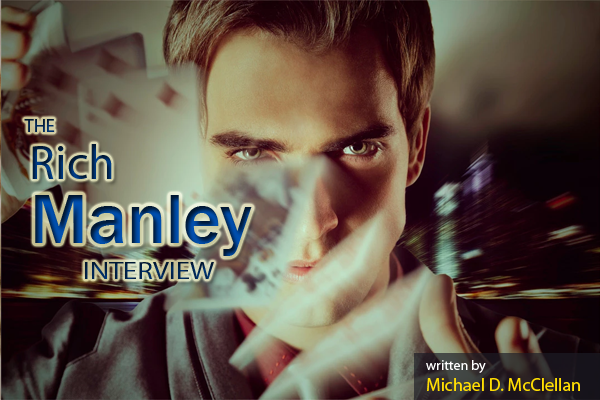
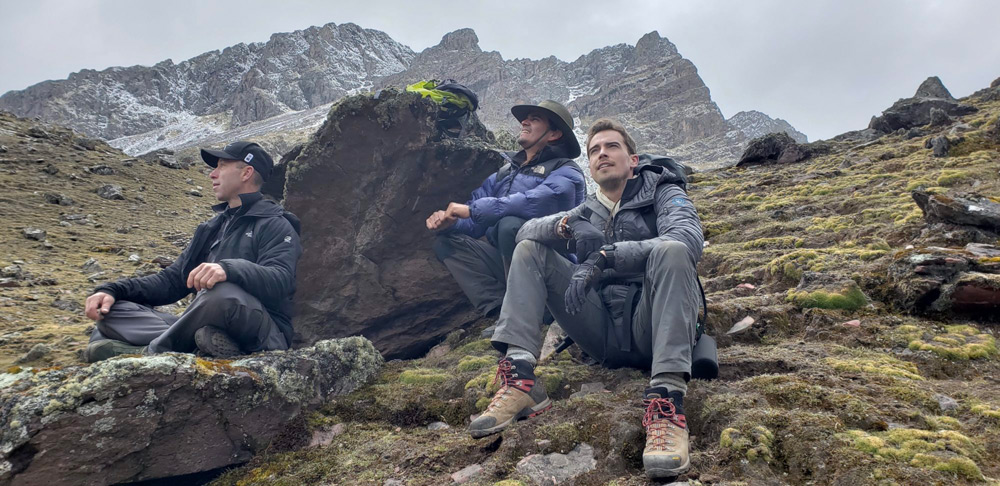
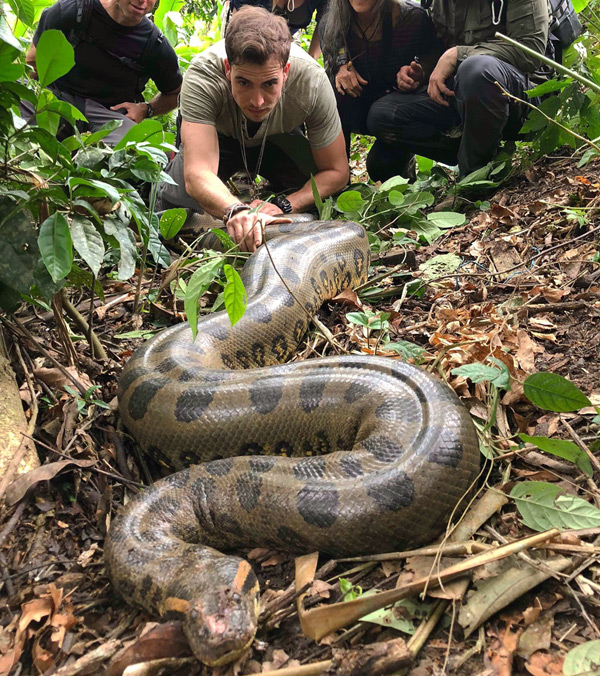
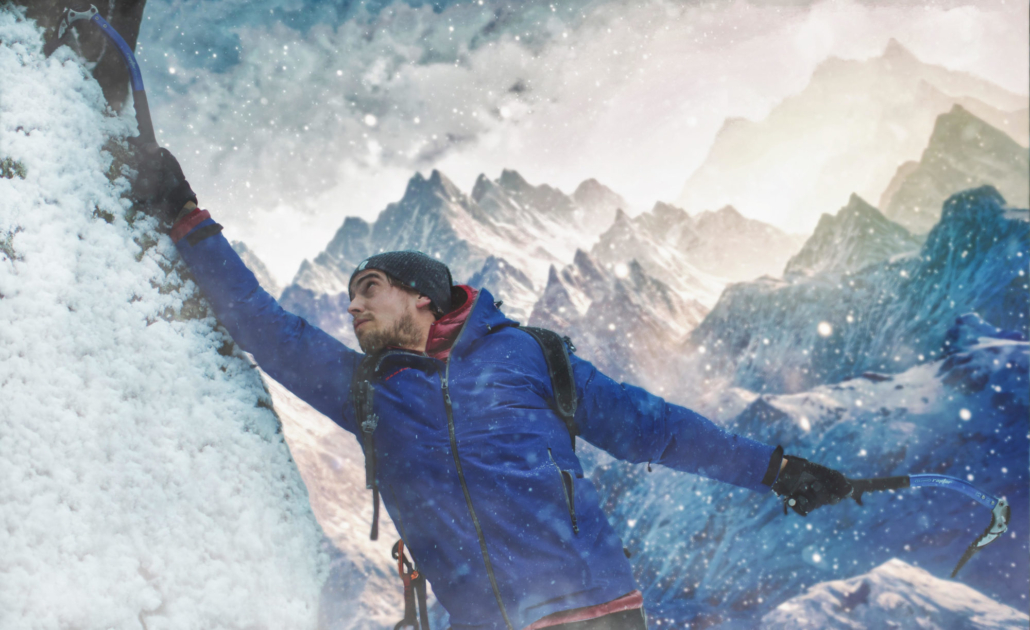
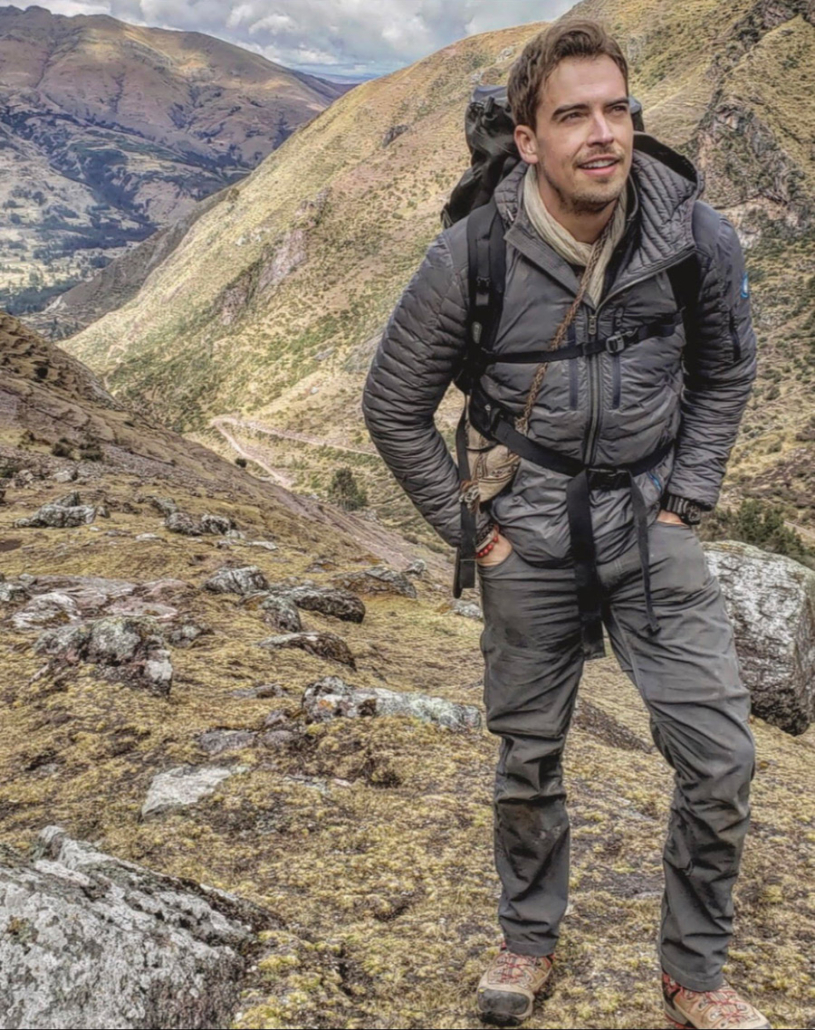
Rich Manley is going places, and he wants to take you with him. The more remote the better. He’s made his way through land as flat and featureless as a page without words, he’s scaled the Peruvian Andes at altitude, and he’s chopped his way through jungle so dense it blots out the sun. Today, the desert calls. Thousands of miles spool out behind him. Thousands more lie ahead. The earth spins. The sun rises. Long shadows shrink into puddles of shade beneath his feet. From dawn to dusk, in every direction, the landscape looks the same. The only thing that changes is the angle of the sun. No matter. Manley is as comfortable here as he would be sitting at home, kicked back on his sofa, a cup of his favorite Turkish coffee in one hand, the TV remote in the other. Nevermind that his GPS is a fickle oracle that gives inaccurate distances and leads him miles in the wrong direction. There’s no cause for alarm, no reason to freak out. Drop Rich Manley in the middle of nowhere, with a compass and a map, and the actor/producer/magician/adventurer is not only coming out of the other side unscathed, he’s going to have one helluva time in the process.

That’s where you come in.


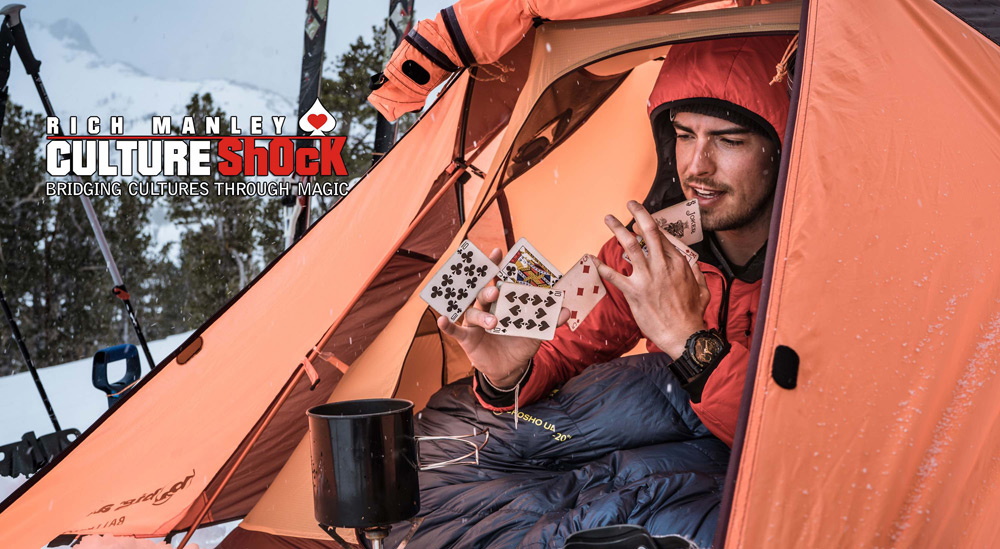
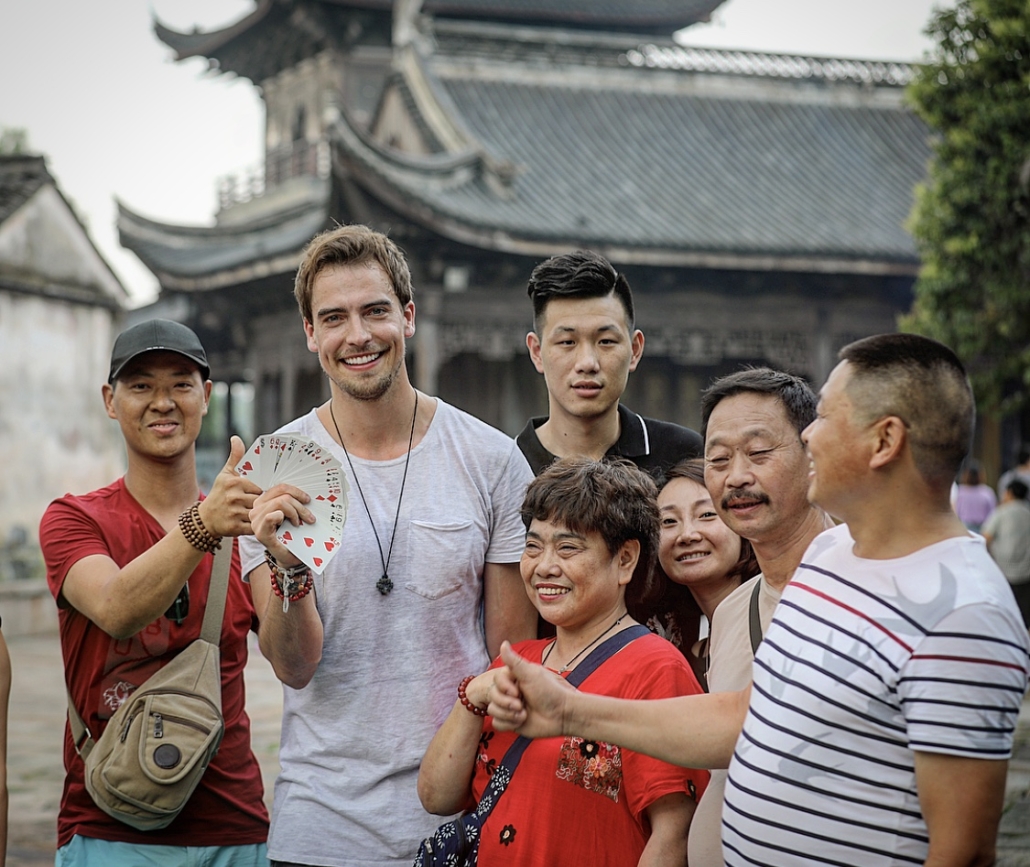
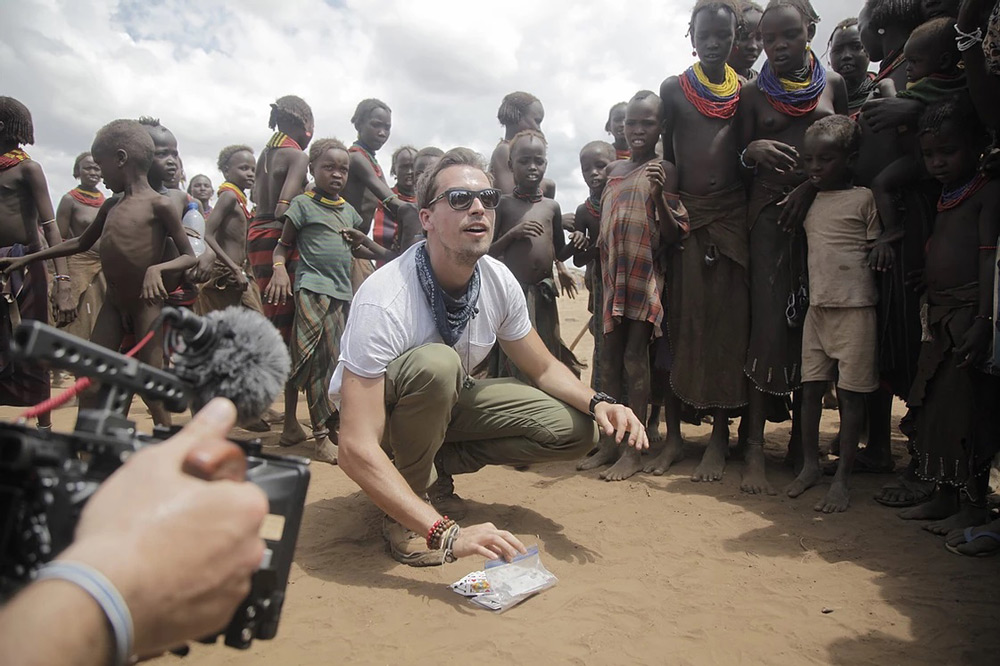
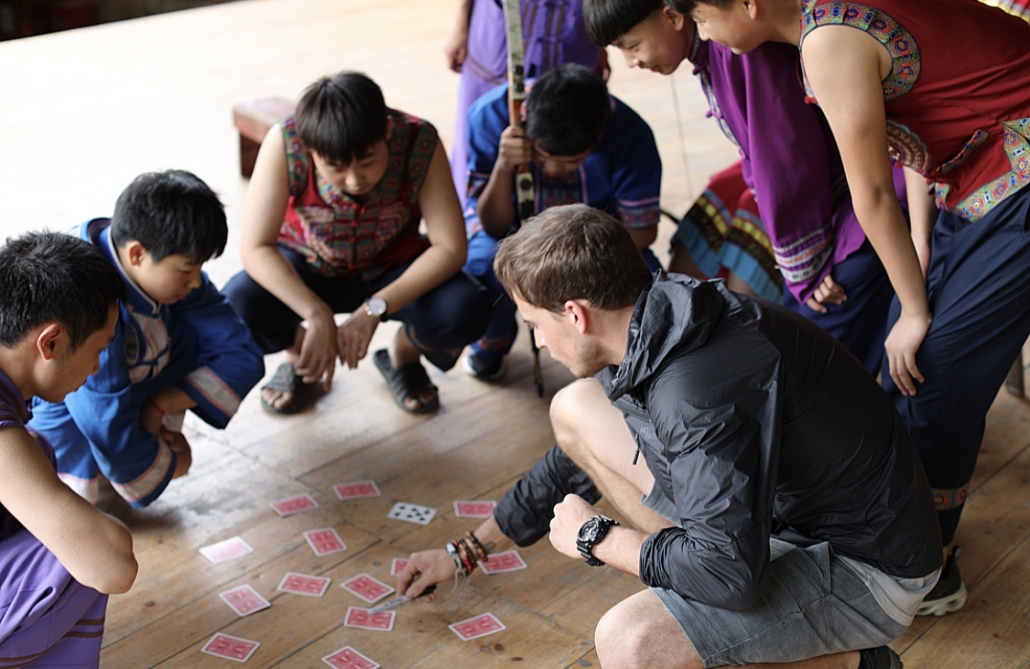
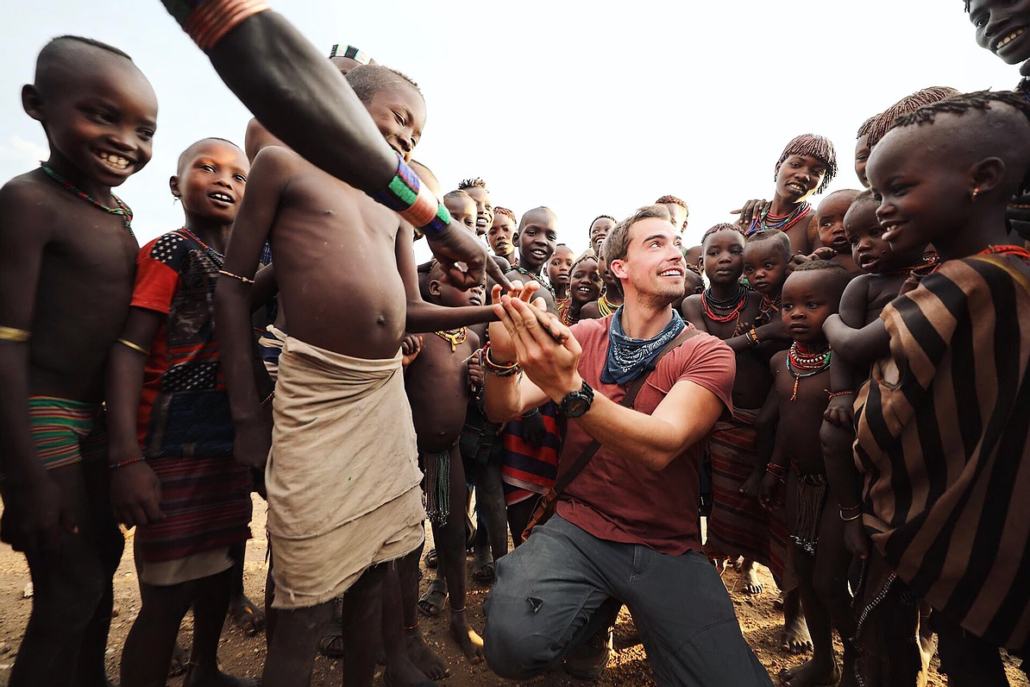
Manley, the star of the upcoming series, Culture Shock: Bridging Cultures Through Magic, wants to share these once-in-a-lifetime experiences with you, taking you on journeys ranging from the high mountain caves of Ethiopia, to the sun-washed plains of Namibia, to the backwaters of the Amazon and beyond. Now available on the Tubi Channel, Culture Shock not only follows Manley to some of the planet’s most exotic locales, it immerses you in the indigenous cultures that he encounters along the way. Manley may not speak their language, but he connects with them through the magic and illusions that he learned from his late grandfather. They, in turn, share their unique magic with him.

Culture Shock isn’t about the magic for magic’s sake,” Manley explains. “It isn’t about the ‘trick.’ It isn’t about, ‘Look at me, I’m trying to fool you.’ This show, at its core, is about communication through magic – energy, humility, compassion, and collective souls coming together. This is a spiritual and cultural coming of age.”

Rich Manley was seemingly born with a backpack, a tent, and a hunger to stay as far as possible from the ever-beaten path. The Concord, Massachusetts native grew up with this passion for adventure thanks, in large part, to his grandfather, a respected surgeon with a distinct Indiana Jones vibe. It was Manley’s grandfather who blazed the trail, traveling the world in search of esoteric medical knowledge and magic, then years later sharing these stories with his grandson. Manley soaked up every detail: Tales of hiking, alone, through sun, wind, rain, and snow, climbing mountains, crossing plains, and sailing across minor seas. He’d sit for hours and listen, his imagination aflame, so much so that he could practically hear the sound of his grandfather’s boots crunching on the treeless tundra, or see the shimmering heat rise up from a parched and dusty road.

Photo Courtesy Rich Manley

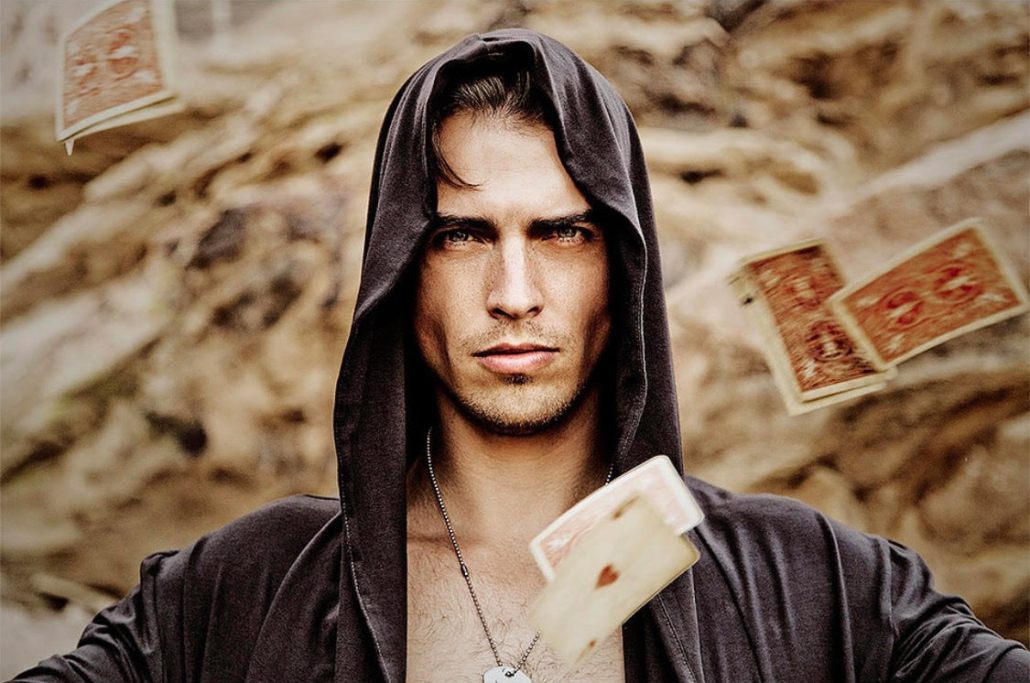
The result is Culture Shock (www.CultureShockMagic.com), Manley’s wild adventure show that’s full of dangerous stunts, exploration, tests of will…and, of course, plenty of magic. All of it germinating from those visits to his grandfather’s study, where he first learned sleight-of-hand and dreamed of one day performing on his own. He was 10 years old at the time, and by his teen years he was doing tricks in front of family, at events, in bars, and even on TV. At the age of 13, Manley started training in Kenpo Karate, receiving his Black Belt in four years (along with teaching status), at his local school. By his late teens, Manley was also into archeology and anthropology, going on digs to uncover Native American artifacts. All of these elements coalesce in Culture Shock.

“I studied and I trained nonstop,” Manley says. “It was a total commitment: body, mind, and spirit. To be able to bring these things to a series like Culture Shock brings everything full circle for me.”

Indeed.

Manley trained extensively and privately with Shaolin monks in those early years, learning Chan Buddhism, Chen and Yang Taiji Chuan, Chi Kung, and Northern Shaolin Kung Fu. All of it setting the stage for what was to come next: Radford University in Virginia, where Manley studied acting, media and sports. That he was able to minor in martial arts was the thing that sealed the deal.

Photo Courtesy Rich Manley

“That experience really got me to thinking about next steps,” he says. “I was able to make a connection with someone who was connected to Hollywood, and that world was very interesting to me. I’d always had an interest in film and television. The opportunity to be a part if it was exciting.”

Manley soon left Radford to become part of the crew for a pilot called Stars, Stunts, Action – an experience that further motivated him to pursue all forms of entertainment. Before long he made his uncredited feature debut in writer/director John Wells’ drama, The Company Men, which starred Ben Affleck, Chris Cooper and Tommy Lee Jones. That same year, he made his credited debut opposite Tom Cruise and Cameron Diaz in director James Mangold’s Knight and Day. From there he’s kept his foot on the gas: Additional feature credits include The Town, Here Comes the Boom, Cowboy Spirit, Bipolar, The Debt Collector, Slay Belles and the upcoming Angel One Eye.

“I’ve had a blast, and I’ve learned something each step of the way.”

It’s hardly surprising that Manley rarely sits still. In addition to Culture Shock, he stars in the upcoming post-apocalyptic series Fallen Cards, and was recently featured opposite Lacey Chabert, James Caan and Lance Henriksen in writer/director Andre Gordon’s Acre Beyond the Rye (based on Manley’s book). Not bad for a guy who happened upon Hollywood almost as if by accident.

Photo Courtesy Rich Manley

“I think it found me,” he says with a laugh. “I don’t think I could have escaped its grip if I’d tried.”

Culture Shock, it turns out, is the perfect escape.

With COVID completely changing the world as we know it, adventuring with Rich Manley in the Peruvian mountainside is a much-needed elixir for our mental health. Give it a try. Climb through clouds to Machu Picchu, the fabled “lost citadel” that perches incredibly atop a precipitous Andean peak at the edge of dense rainforest. Travel along the Amazon River as it meanders its way to the sweeping Brazilian coastline. Watch Manley share his amazing powers of prestidigitation, dazzling children and adults alike. You’ll not only find the ideal way to detox and destress, you might even find yourself planning an adventure of your own.

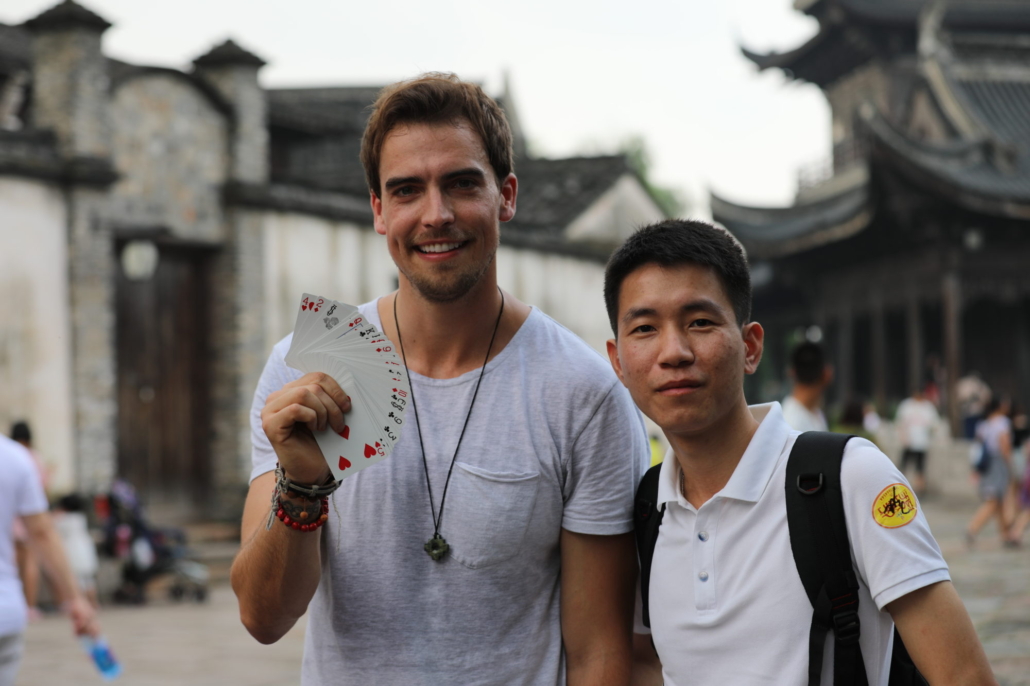
And if you happen to encounter a handsome stranger wearing a backpack and sporting a deck of cards, you might want to stop and introduce yourself.

Trust me, you’ll be glad you did.

Let’s talk Culture Shock: Bridging Cultures Through Magic. Where did you get the inspiration?

Culture Shock is a concept that actually started when I was about 10 years old. My grandfather was a surgeon, and he traveled around the world as part of his practice. He would visit with indigenous cultures and learn about their methods used for healing, whether it was the herbal medicines used in Peruvian Amazonia or the spiritual meditation practiced in Tibet. He also loved climbing; he spent time in the mountains of Japan, and he also climbed the Matterhorn in the Swiss Alps, so there was a bit of an Indiana Jones thing going on with him – he even wore a fedora like Indiana Jones. The study in his house was filled with items he’d collected during his travels, which made it feel like you were on the set of Raiders of the Lost Ark. As you might imagine, I couldn’t wait to visit and ask him questions about all of these amazing, faraway places that he had been. He also loved sailing and he loved the ocean, so there were all kinds of mariner’s tools in his study – compasses, nautical charts, astrolabes, chronometers, things like that. It felt like you were in a museum. So, because my grandfather loved adventuring, I think that in turn invoked a sense of adventure in me.


In Culture Shock, you perform magic for indigenous cultures.

That idea also came from my grandfather. Magic was something that he used to do for the people that he met along his travels. He learned magic because, in the 1940s, the medical profession was teaching surgeons to be better with their hands. Finger dexterity was just starting to become very important, so he learned magic to be a better surgeon. I was 10 years old when my grandfather taught me my very first sleight-of-hand trick.

Photo Courtesy Rich Manley

How do you select the places you visit?

My grandfather left me his journal when he passed away, which details all of the countries and places that he’d visited during his travels. He was very thorough in his journaling; there are notes about where he did magic, and notes on the cultural aspects and the traditions of the people that he visited. So, Culture Shock is based on me receiving my grandfather’s travel journal and retracing his path to all of the countries and all of the remote areas that he visited to meet these people.


The world has changed dramatically since your grandfather’s travels.

The heart of the show is about meeting all of these beautiful, indigenous people, and learning how the modern world is affecting them. We get to learn how they live, and experience their customs and traditions firsthand. It’s an eye-opening experience; some of these people are far happier with absolutely nothing than a lot of us living in First World countries today. In Western society, we have all of these things that make our lives so much easier, from relatively simple things like indoor plumbing to more complex things like cars and computers and smartphones, and yet we’re constantly bogged down by stress and anxiety. The difference is striking, and I think the viewers will see that. The people we meet in Culture Shock have been living the same kind of life for generations. It was awesome to learn about the traditions and oral stories that they’ve passed down for generations, and seeing how these help to keep them close knit and family-oriented.


Where does the first episode of Culture Shock take us? And what will we learn?

We go to Peruvian Amazonia. It was surprising to learn that many of the indigenous people we met not only have their own stories of magic, but that they have their own forms of magic that they practice. There’s an Amazonian shaman who explains that their form of magic is herb-based. While a lot of the plants in the Amazon have been discovered by the Western world, there remain some that are still undiscovered – and these plants could be potentially used to cure cancer and a lot of other diseases that plague us today.

The first episode is fascinating because it shows how some of these different plants can open you up spiritually, making you receptive to knowledge from what they call Pachamama – which is equivalent to our Mother Nature in Western society. In Inca mythology, Pachamama is a fertility goddess who presides over planting and harvesting, embodies the mountains, things like that. She’s an ever-present deity who has her own power to sustain life on this earth. The first episode goes into this, and shows how they use coca leaves to connect to the cosmos, which is what they do on the eastern slopes of the Peruvian Andes. They hold Ayahuasca ceremonies, which is their way of connecting with Mother Nature and Mother Earth. They live their lives based on the messages that they receive from the huacas, which are the spirits of the mountains, and Pachamama, which is Mother Nature.

Photo Courtesy Rich Manley

Was it hard to overcome the language barrier?

A lot of times it’s tough to communicate with these cultures that I encounter. Thankfully, I get to share a little bit about myself when I do magic. And since magic doesn’t require language, it’s a good way for me to bridge the gap and make a connection. I might go somewhere in remote Peru, where they speak a muddled language that’s a combination of Spanish and their own dialect. Or I might visit a part of Africa, where they speak a Bantu language like Swahili. So, I use magic to break down the language barrier and find common ground. There might be an awkwardness and lack of trust in the beginning, but all of that goes away when I do magic for them. At that point it’s very easy for them to take me in and say, “Okay, we can embrace this person. We can share our traditions and values with him.” Through magic, you begin to see how similar we all are, and that’s really what the show is about.


Culture Shock isn’t a one-sided experience. There seems to be a real symbiotic relationship between yourself and the people you meet.

Very much so. We were in the mountain area of Pitumarca, Peru, where we came upon a Quechua village. These are people who live up in the Andes Mountains, which is at a very high-altitude. They acclimated a long time ago, grow their crops, and survive in a harsh environment. I met a small village family, and I did some magic for them. They had never seen Westernized magic, which is basically sleight-of-hand tricks, and they were fascinated by it. You can see their reactions; they had the hugest smiles on their faces, which you’ll see in the footage when the show comes out. They had a wonderful time, and we did as well. It was just amazing meeting them, and seeing how innocent and pure they were when they smiled.

After doing magic for them, they introduced me to the village shaman. It was such an awesome experience because they performed a ceremony for me, the mountain ritual in which they give thanks to Pachamama – Mother Nature – and the huacas, which are their version of spirits contained in rivers, mountains, and all of the land. This was in the winter months in the Andes Mountains, so the sky was very overcast at the time the mountain shaman prepared the ritual. It was also very cold, with a mixture of snow and rain. He began the ceremony and we all circled around him. I just felt this energy – you could feel the wind blowing, and you knew that something was going on – a calmness, and the presence of something else around us. I won’t get into too much detail about the ceremony because you’ll be able to watch it…but after the ceremony, the clouds actually separated and you could see the blue sky above. I turned to my cohost and one of the other guys in the crew, and we all couldn’t believe what we were seeing. We were equally stunned to think that this ceremony, with the shaman giving thanks to the mountains, could actually clear up the weather that was so overcast and inhospitable just a few moments before. It really put things in perspective. The magic that I do is obviously just a way for me to entertain, have some fun, or make light of the situation. But after experiencing what happened during that ceremony…it convinced me that there really is some form of magic out there.

Photo Courtesy Rich Manley

How did you learn magic?

The first tricks that I learned were from my grandfather. There is this one trick, where you have a card in your hand, and you make it disappear and reappear. It’s a difficult trick to do if you have small hands, so, being 10, I had to work on it. From there I read books, watched shows about magic, and then developed my own tricks based on the principles and the basics of sleight-of-hand. I really enjoyed watching David Blaine and Criss Angel growing up, so I’d watch their shows.


When did you start performing magic in public?

During my teen years. I worked in restaurants as a server, so I started out by doing magic tricks for the customers. Then, I became a bartender when I was a little older, and I’d do magic for the people there. I just enjoyed going out and doing tricks. I would do a lot of magic.


You’re more of a close-up magician than someone who does the big stage illusions.

Yes. I prefer that kind of setting over the big stage tricks. It goes back to my roots being in sleight-of-hand. Cards are the thing that I’m most comfortable with, but I enjoy taking everyday objects and doing tricks. If I’m at a bar, I might see a salt shaker, so there might be an opportunity to do something with that. Or I might want to do a trick with something that someone has on them, like a ring or a dollar bill. I like the magic to be organic. Nothing to set up. I was never into the bigger stage allusions only because for me, I loved watching them, but I didn’t have a burning desire to perform them. That’s because I prefer a more intimate setting.

Photo Courtesy Rich Manley

What about street magic?

When you’re doing street magic, you’re performing in a very intimate setting. It’s basically the same thing as if you’re doing close-up magic at a bar or at a restaurant: Everyone’s right there, right in front of you, so the stakes are higher in terms of people seeing what you are doing. You have to control a lot more, and there’s more psychology involved than a lot of people understand. Part of it is managing people – talking to them as you’re performing, keeping their minds occupied while you’re doing the sleights and making the moves. You’re always engaged with the people you’re entertaining: You’re talking to this person. You’re talking to that person. You have to be very aware that someone could come up behind you, or that someone could be standing at just the right angle to see what you’re doing. There’s a different energy that comes with that type of magic. Whereas, if I’m doing magic on a stage, there’s less of a challenge because everything is controlled. I prefer an uncontrolled environment. I want to be able to take a deck of cards, or take a common item off of someone, and then entertain them while all of these other things are going on, and while people are looking at you and trying to figure it out. That has always been fun for me.


You were into archaeology at a young age. How did that influence what you’re doing today?

I started to get into archeology about the same time that I was getting interested in magic, which was around 10 years old, so the two kind of went hand-in-hand. Maybe I liked it so much because I’d always been drawn to Indiana Jones. I was very fascinated with Egypt. The ancient Egyptians actually had their own forms of magic – they would actually do a few tricks that you see today, like tricks with rings, cups, and balls. As I became more interested in Egyptian culture and history, that sparked a lot of my other interests in anthropology throughout the world, such as in Africa, Japan, and Asia. As I got a little older, I started looking into things that I could do locally to enhance my knowledge and understanding of both archaeology and anthropology. Growing up in Massachusetts, there was a lot of Native American activity, so I joined an archaeological society in my later teens. We went on digs in Wayland, Massachusetts, which was really cool because we found all of these different arrowheads and tools. I enjoyed that a lot. I also enjoyed learning the techniques of mapping out what we’d found.

Photo Courtesy Rich Manley

You went to Radford after graduating from high school. Why Radford?

Growing up, there were three main interests in my life – magic, archaeology/anthropology, and martial arts – so I went to Radford primarily because it offered a program where I could minor in martial arts. I honestly didn’t know what I wanted to do with my life at that point, but I knew that I loved martial arts; I’d spent time training with Shaolin monks from China as a teenager, and at one point I was training eight hours a day – it was all that I was doing with my free time. It helped me mentally, because the meditative effect of doing martial arts, especially Shaolin, which they consider moving meditation, goes hand-in-hand with having that center that permeates into everything else that you do. It also gives you the discipline and the Zen mentality that you experience when you visit different cultures. My time in the martial arts has really helped that regard. It’s given me a better understanding of other people as well, which really helps with a show like Culture Shock.


You weren’t at Radford long before you made the jump Hollywood. Please tell me about that.

While I was at Radford, I met a man named James Houston. He was the owner of a local martial arts school. I met him through Dr. Jerry Beasley, who was my guidance counselor there at Radford. Jerry used to write for Black Belt Magazine, and he’s a member of the Black Belt Magazine Hall of Fame. During the 1980s he worked with Joe Lewis, the legendary, undisputed American heavyweight kickboxing champion, so he’s someone you listen to when he’s giving advice. He told me that I had to talk to this guy, James Houston, who owns this school and who could really help me reach my potential and become a great martial artist.

So I met James, who is a very charismatic and interesting guy. He was always traveling to Hollywood, and at the time he was working on a TV show called Stars Stunts Action, where he would do behind-the-scenes interviews. He’d talk to people about their martial arts, their stunt work, and working in Hollywood as a stunt person. I was fascinated by this whole thing. I said something to the effect of, “Hey, if you have any openings, I’d like to come along…” So he hired me as a production assistant, and I moved to Hollywood and started meeting people in the stunt and martial arts worlds.

Photo Courtesy Rich Manley

Did you think it would lead you to where you are today?

I was enamored by the whole Hollywood scene. I didn’t know where it would lead, but I knew that I needed to trust my instincts. In my head I said, “Hey, maybe I can use the martial arts skills that I have to do martial arts in movies.” I was willing to do whatever I could find, whether that was stunts or acting roles. And I was still doing magic. I was invited to a lot of Hollywood parties, so I would do magic for people at the parties. That was the start of me saying, “I want to use my magic and martial arts skills and see where these take me.”


Like an upcoming movie project! Please tell me about Acre Beyond the Rye.

Acre Beyond the Rye is a film based on a book that I wrote. After I finished it, I brought it to a friend of mine who’d self-published a couple of books. He took a look at what I wrote, really liked it, and offered to take a pass at my draft. He immediately dived in and did some rewrites, at which point we put our names on it jointly as co-authors, and then he went through his publisher to publish the book. That was the easy part. Making a movie was something that I’d always wanted to do, but it’s not something that can be done in a vacuum. For that reason, there was a period of time early on when I wasn’t ready to make Acre Beyond the Rye. Besides, when I first came to Hollywood, I was auditioning to get into someone else’s projects rather than making my own projects. But then I started meeting individuals in the business: I got a job at Paramount, and I also worked as a script supervisor and writer for another company, so I used those experiences to network and build my contact list.

Photo Courtesy Rich Manley

How were you able to take a self-published book and land a movie deal? Especially one that stars James Caan?

Oddly enough, my big break came while I was doing magic tricks at an L.A. sushi restaurant. I was doing magic for the sushi chefs, and this guy came over and introduced himself. His name is Barry Bernstein. He said that my sleight-of-hand was really good, and that he managed a lot of magicians, guys like Max Maven. He explained that he was an accountant, and then he asked me if I needed one, which I did. That was how we became friends. Before long he learned that I had ideas for all of these movies I wanted to make, including Acre Beyond the Rye, but that I didn’t have the financial means to make it happen. I had all of my contacts from my time at Paramount; I had all of my contacts that I’d met through James; and I had all of my contacts that I had through the other productions that I’d worked on. I just didn’t have the financial backing for a film, and I didn’t have a clue how to set up my own production company. Barry helped with that. We started out doing some other smaller projects, but I eventually got back to Acre Beyond the Rye, and wrote the script based on the book. Once we had a script, we used my contacts from Paramount to find a producer, a director, and all of the other pieces that we needed to make the film. We were able to put together an amazing cast, headlined by James Caan and Lacey Chabert. Barry jumped in and helped raise the money that we needed. He eventually became the executive producer, so my accountant is now my business partner.


What can you tell me about Fallen Cards?

Fallen Cards, was the first project out of the production company that I started with Barry. I actually started writing Fallen Cards while I was still at Paramount – I’d work on it when I had free time in my office. They say that you should write what you know, so I created a story of based on a magician who is also a martial artist as well. It’s set in a Mad Max, post-apocalyptic world. I spent a lot of time writing that screenplay. Like Acre Beyond the Rye, we didn’t have a lot of funding for it, so I took it upon myself to really raise money with Barry. When it came time to cast, I went out to my contacts… I knew all of these funny guys, guys like Kevin Farley, who is Chris Farley’s brother. I called up Brandon Morale, who is a good friend and who has been in a bunch of films with Adam Sandler. Even though they were primarily known for comedy, I thought it might be interesting to see them in a serious role.

Photo Courtesy Rich Manley

What was it like putting this film together?

I wore a lot of hats. I would run all over town; one minute I’d go to the prop houses and pack my car with everything needed for a particular shoot, the next I’d be packing my car with service food to feed that cast and crew. Kevin Farley looked at me one day and said, “You’re acting in this film, you’re doing the martial arts, your bringing everyone their food, you’re pickup up the props. How in the hell are you doing everything?” I just said that I’m going to do whatever it takes to get the ball rolling. The funny thing about it is that the more that I invested my time and energy to make it happen, the more people responded to it. Pretty soon we had the funding for it. I think that’s the way it is a lot of times. If you want to do something worthwhile then you just go for it. If there is value in it – if it’s a good idea and a good product – then I think people will get behind it and the resources will come. They will want to be a part of it, and word spreads and others want to be a part of it, too. That’s what happened in the case of Fallen Cards.


Let’s look ahead. What’s next for Rich Manley?

Everything is up for speculation due to COVID. With Culture Shock, we were ready to visit Madagascar and shoot an episode there when the coronavirus pandemic hit. Hopefully the situation will improve and we’ll be able to pick that back up in April, 2021. I picked this particular place because it was actually a utopia for pirates back in the 1700s. We’re going to go there and explore shipwrecks, and then go inland in search of a lost pirate colony called Libertalia. We also have a trip lined up for Greenland, and also one for Rwanda, which we’re very excited about. So the plan is to go to those countries and film those three episodes for Culture Shock.

Photo Courtesy Rich Manley

You’re living your dream. If you had one piece of life advice, what would that be?

You have to follow what you love doing. I love magic; I love martial arts; I love culture and history. Because I’ve followed what I love, and because I’ve kept pushing forward, I’ve been able to do some things that I never thought I’d get to do. So follow what you love, keep doing it, and don’t give up.

Written By: Michael D. McClellan |

Psst. Nik Wallenda has a secret he wants to share. The record-setting daredevil, who has thrilled millions with his white-knuckle treks across the Grand Canyon, Niagara Falls, and – wait for it – an active volcano, found himself at a crossroads after an eight-person pyramid collapse injured five, including his sister, who ended up in a coma and had 73 screws and plates inserted into her face. Wallenda, who was anchoring that pyramid under the Circus Sarasota Big Top that winter afternoon in 2017, clung to the wire for dear life when the team’s practice stunt when horribly wrong. While he walked away without a scratch and stepped back onto the wire the next day, Wallenda wasn’t as unfazed by the accident as it seemed on the surface.


“I was battling fear,” says Wallenda, who dives deep into the traumatic event in his new book, ‘Facing Fear: Step Out in Faith and Rise Above What’s Holding You Back’ (Sept. 15/HarperCollins). “We were attempting to break a world record for the highest four-level, eight-person pyramid. After training for six weeks we brought it up to 30 feet above the ground. We were days before attempting it in front of a live audience and in front of Guinness, and then the collapse happened. I got back on the wire the next day, and performed for the next six weeks as if nothing were wrong. But then, when that contract ended, I had six weeks where I wasn’t performing. That’s when I realized that there was something different about me. I started experiencing fear. It was an entirely new emotion to me, and it became debilitating, to the point where I told my wife I was done.”

For Wallenda – a seventh-generation member of The Flying Wallendas family of aerialists – this was not only a stunning admission, but the first step in his journey to overcome fear and resume the death-defying feats that have captivated imaginations around the globe. And if you’re wondering whether Wallenda is fully healed, you need look no further than his March 4, 2020, walk across the heat-generating, gas-spewing Masaya Volcano in Nicaragua. Crossing the volcano’s active lava lake, Wallenda offered proof positive that he’s on top of his game.

“That walk was challenging in so many different ways,” he says. “Pulling it off wouldn’t have been possible if I hadn’t gone through the process of facing my fear and silencing the shame that came along with it. From that point I was able to work through my fear and resurrect my dreams of being a world-class aerialist.”

A holder of 11 Guinness World Records, Wallenda has more than lived up to the legacy created by his great-grandfather Karl, who brought the family to the United States in the 1920s and immediately started thrilling young and old alike.

Nik Wallenda – Photo Courtesy Rogers & Cowan PMK

“I’m very proud of our family’s place in history,” Wallenda says, “and I’m proud to do my part to carry on the tradition, even though my mom and dad tried to push me away from the industry. They didn’t want me to carry it on because of the struggles of the circus world. My great-grandfather said it best in the 1970s: ‘In this business, one day you eat the chicken. The next day you eat the feathers.’ I totally get that now. This is a very fickle, very feast-or-famine business.”

Crossing Niagara Falls into Canada on June 12, 2012, Wallenda made history of his own: Enigma Research estimates that one billion people had either seen or knew of Wallenda’s Niagara Falls walk. The event was ABC’s highest rated Friday night program since November 2007, and the highest non-sports summertime program on any of the major networks in six years. A year later, Wallenda upped the ante with a riveting walk across the Grand Canyon, completing the 1,400 foot walk in 22 minutes, 54 seconds, using a 2-inch-thick steel cable.

Nik Wallenda crosses the Grand Canyon
Tiffany Brown/Associated Press Images for Discovery Communications

Wallenda has built quite the resumé by defying convention. He’s crossed the Chicago and New York City skylines on a high-wire; he’s hung from his teeth 250 feet above the ground as part of a helicopter stunt in Branson, Missouri; and he’s crossed between the two towers of the ten-story Condado Plaza Hotel in San Juan, Puerto Rico, recreating the very act that had killed his great-grandfather Karl Wallenda in 1978. None of it possible without a healthy approach to managing his fear.

“I’m human, just like everyone else,” he says. “Fear is something we all have to overcome. I hope this book helps others take what I’ve learned and apply it to their everyday lives.”

The Wallenda name is synonymous with thrill seeking. We’re talking hundreds of years!

My family started performing in the 1780s in Bohemia, eventually making their way to Europe and into Germany, and then on into the United States in the 1920s. We’ve been at it for quite a long time, that’s for sure!


How did your family end up in the U.S.?

In 1927 they performed in Havana, Cuba. John Ringling, who was based in Florida, heard of this amazing high-wire troupe that he had to go see with his own eyes. So, he got on a ship and went over to Cuba to watch the show that my family was headlining. When the show’s owner caught wind that John Ringling was in the crowd, he went to my great-grandfather and said, “You guys have the night off tonight.” This didn’t make sense, especially since it was a packed house and everybody was there to see them. Long story short, the show’s owner knew that John Ringling would like what he saw, and that he would immediately poach my family and bring them to the United States. Well, John Ringling was a smart man, and he knew that there was a reason my family was pulled from the show. I’m sure it had happened to him many times before during his lifetime. So he sneaked back in the following day, saw my family perform, and immediately signed them as part of the “The Greatest Show on Earth” with Ringling Brothers. The next year, in 1928, they made their way to the United States, and my family headlined at Ringling Brothers for about 17 years.

Karl Wallenda

Was that when the press starting calling your family The Flying Wallendas?

It was around the time that my great-grandfather went out on his own, opening his own show in the 1940s. In 1947 he created the famous seven-person pyramid, and performed that until about 1962. That’s when they had that tragic accident in Detroit, Michigan. A couple of my family members were killed, and an uncle was paralyzed from the waist down. My great-grandfather sneaked out of the hospital the next day against the doctor’s orders, just to get back on the wire. It was an example of him living by the family legacy, and the now famous words, “The show must go on.” That’s something I still believe in, although I use the words “Never give up.” In fact, that’s how I sign every autograph.


Your great-grandfather was the legendary Karl Wallenda. He was about as fearless as they come.

Yes, he was fearless in many ways. He went on to create these amazing pyramids performed all over the world, and he walked the wire into his 70s. He walked across Veterans Stadium in Philadelphia with 30,000 people looking on, open-mouthed, and he walked it in places like Tallulah Gorge, Georgia, on a wire 1,000 feet across and 750 feet above the ground. He was 65 at the time, and his wife handed him a martini when he reached the other side – but not before he’d stopping midway to do a couple of handstands, one in honor of our soldiers in Vietnam, and another for laughs, so he was definitely a showman with a flair for the dramatic.

My great-grandfather eventually made his way to San Juan, Puerto Rico, where my family was headlining on a show that wasn’t selling many tickets. He decided to do a walk between two skyscrapers at the Condado Plaza Hotel to help promote show. He was 73 years old at the time. He got on that wire unaware that it had been rigged unstable; the guys who rigged it weren’t part of his normal team that included my uncle, who was performing elsewhere, and my father, who was home because my mother had just suffered a miscarriage. Long story short, because of the high winds and the improperly secured wire, he lost his balance, fell, and lost his life. That was in 1978, Less than a year later I was born, and that was the legacy that I inherited.

Nik Wallenda – Photo Courtesy Nik Wallenda

Karl Wallenda’s best friend was none other than Evel Knievel.

Yes, they were very close friends. They both shared the same passion for entertainment, and also for pushing the limits. It’s just like me being friends with David Blaine, Chris Angel, and many of the other daredevils today. I think because there’s not a lot of us, and because we are all part of the same small community, that a natural closeness develops. It was the same with my great-grandfather. He and Evel Knievel spent a lot of time together during their lifetimes. They respected each other a great deal. In fact, when Evel Knievel attempted his big jump in that rocket over the Snake River Canyon, he recruited my family to open for him. If you look at the ticket stubs you’ll see the Wallenda name right there. So they were close. They performed a lot and spent quite a bit of time together.


When did you start walking the wire?

My mom was six months pregnant with me and still walking on the wire, so I’ve been walking on a wire longer than my feet have been on terra firma [laughs]. As soon as I could stand up, they had me on a wire a couple of feet off the ground. Not on my own, obviously; my mom or my dad would grab my hand and sort of walk me back and forth. I have photos of me walking on a wire at 18 months old. My great-grandfather really said it best in the book that he wrote in the 1970s. He said, “Life is on the wire, and everything else is just waiting.” That is very true. For my family it is a very literal expression, but the reality of the situation is that everybody is on a wire. That’s one of the reasons that I wrote this book, because everybody is on a wire and everybody’s trying to get to the other side. My family just does it in a literal sense: Even though there are gases in the volcano, or heavy winds in the Grand Canyon, or heavy mists at Niagara Falls, we are still going to face our fears and make it across to the other side.

Nik Wallenda

In 2013 you performed that heart-stopping wire walk over the Grand Canyon with millions watching on TV.

Very early on, it was a dream of mine to walk across the Grand Canyon. In fact, I was making plans to walk across the Grand Canyon well before I sought permission to cross Niagara Falls. It was a long and tedious process of just figuring out where in the canyon I could walk. And then there was the engineering involved, which was just as much of a challenge as actually getting on that wire and walking it.


How did you train for that walk?

I trained with wind machines creating gusts of up to 90 mph. We knew that the winds were not going to exceed 50 mph, so training at 90 mph really helped me prepare both physically and mentally. I did have to endure a couple of 43-mph gusts while I was out there the day of the walk, so it did get fairly windy. What I learned from walking the Grand Canyon is that you can never train enough. I remember being out in the middle of the canyon and thinking that, even though I’d trained in 90-mph winds, I wish I had trained at 120-mph winds. When you’re in the real setting, you’re much better of mentally, emotionally, and physically if your preparation has gone above and beyond. Thankfully everything worked out. The result was a dream come true. It was an extremely successful TV special. In fact, my Grand Canyon walk still remains the highest-rated special in the history of the Discovery Channel, which is the largest network in the world. It was a huge success, and it opened a lot of doors.

Nik Wallenda speaks at a press conference in Chicago after successfully walking the wire across the Chicago River, Sunday November 2, 2014.
Jessica Koscielniak / Sun-Times, File

How do you cross the Grand Canyon on a wire, with no harness, and keep calm?

A lot of it is the power of our mind – where we allow our mind to go, and what energy we give our thoughts. I am a believer, so I give all of my thoughts to God. There are so many times in life where my mind will want to go to a negative spot. The Grand Canyon is a perfect example. When I got hit with those 43-mph winds, my mind naturally wanted to freak out. I was then able to counter that negative thought with the fact that I had trained and prepared for that moment. Everything was going to be okay. I’d practiced walking in 90-mph wind gusts. I’m going to be okay. So I sort of talked myself down, and before you know it, my heartrate dropped down to a normal level.


Your new book is titled Facing Fear.

In some ways, I guess I never realized what fear was because I was raised to be fearless. The reason I wrote the book was because of that 2017 eight-person pyramid fall while training in Sarasota, and the fear that I experienced after that. The book talks in depth about the process that I went through to overcome fear after that terrible accident.


How do you deal with fear after something like that pyramid collapse?

After that accident, I started to experience fear to the point where it became debilitating. I actually thought I was done walking the wire. I remember that crucial conversation with my wife, where she said, “Look, I support you, but the family lives by the words ‘the show must go on.’ You do what you do to inspire people. I think you may need to dig a little deeper.” Well, that really set me off on a faith journey, one that was about finding out who I was, and then realizing that, yes, fear was a part of it, and that the seed had been planted during that accident. Reality of what happened that day hit me – I’d almost lost my sister. She was torn up and in a coma, and had 73 screws and plates in her face alone. And even though I got back on that wire the next day, I came to the realization that I was avoiding a very essential fact: Despite what I might have looked like on the outside, I was running from fear rather than dealing with it.

Acrobat siblings Nik and Lijana Wallenda prepare to attempt a highwire stunt in the middle of Times Square in New York City.

Is it fair to say that you were in denial of that fear?

That’s very true. My pastor recommended seeing this amazing Christian psychologist in town. After spending an hour with her I remember saying, “I’m fine. I got back on the wire right away. I don’t need to talk to anybody.” She challenged me and said, “You’ve got to deal with it. You have to learn about your fear, but before you can do that you’ve got to acknowledge that the fear is real in your life. And then once you do that, then you can deal with the shame.” And I think that’s when it hit me. I was ashamed of the fact that here I was, Nik Wallenda – entertainer, daredevil, risk taker – and I’m supposed to be fearless…but I’m really not. I’m human. I’m real. I experience fear like anyone else. I had to work through all of those steps in order to work my way to that shame. Only then was I able to face the fear, deal with the fear, and then overcome that fear.

The book applies to my personal struggle with fear, but it is really written for people who are dealing with fear in their everyday lives. For example, I talk to people all the time who are miserable every day when they go to work. They do it because there is a paycheck on Friday and it covers the mortgage, but they really have dreams of a different occupation. Fear is preventing them from pursuing their dreams. What happens as a result? They prefer the status quo. They settle. I wrote this book because I wanted to inspire them. “Yes, you’re in a job that you don’t like. You have to be smart – you don’t want to walk away from your job without a plan, but you can take action and prepare for the job you really want.” My hopes are that people reading this book will use the lessons that I had to go through and apply it to real world situations in their own lives. If so, then they might not have to go as deep down in the valley as I did before reaching the mountaintop.


You mentioned preparation. That seems to be a key ingredient to conquering fear.

The amount of preparation that goes into what I do is incredible. Just to give you an example, my latest TV special was on ABC, where I walked over an active volcano – the Masaya Volcano, near Managua, Nicaragua. We studied volcanoes for four years as a team just to prepare for this event. We wanted to know the effects not only on the equipment, but also on the individuals who would be closest to volcano. We also worked with many volcanologists to understand this unpredictable environment as best we could, and then developed a training regimen based upon that science.


How do you train to walk across an active volcano?

We knew that I was going to have to wear a gas mask for this walk, and the science told us that wearing a gas mask would deprive my brain of oxygen. Actually, a gas mask can drop your oxygen level anywhere between 15-to-30%. So I trained on a wire that was the same length as what I would walk over the volcano, and I wore an oxygen deprivation mask that would cut my oxygen levels all the way down to 30%. That way, I was only breathing 30% oxygen during my practice walks. The logic being, if I could perform a walk with my oxygen level that low, then performing the walk at 70% oxygen was going to much easier.

The gases were a challenge in other ways. In fact, the gases were much stronger than anyone anticipated, including my team that had done all of the studies. There was a high degree of variability with this environment. We installed safety cables in that volcano crater that lasted two months before failure, and then we had some that started failing after 10 days. That’s because conditions inside a volcano change almost daily. Gas levels can be thicker from one day to the next, from one week to the next, so it was hard to predict what window we were going to be in. I not only trained with goggles to protect my eyes from the sulfuric gases, but I trained with goggles that were fogged up on purpose, so that I literally could not see through them. I wore special suits designed to keep me hot, so that my body would be prepared for the heat. I walked with weighted vests and also with the extra weight of an oxygen tank, in case the gases got so bad and that I needed oxygen. I walked the wire like this forwards and backwards, sometimes six times per training session. Oftentimes I’d practice with all of this gear on, walking a mile-and-a-half without stopping. That way I could prepare for those worst cases, so that when I am faced with them I’ve already been in much more difficult situations. It’s similar to somebody who is about to speak in front of a large group. The more you practice, the more comfortable you get. And the more comfortable you get, the better the chances of delivering a better message.

Mr. T(L) and Nik Wallenda attend Mr. T And Nik Wallenda Celebrate National Amazing Month.

Does this training also help your concentration?

Yes, absolutely. A lot of training is about not being distracted. That was especially true for my walk over Times Square. There’s no greater distraction than all of those giant LED screens, people, taxis, and noise that you have going on in Times Square. So yeah, concentration is a huge part of it – training to not be distracted, and to stay focused. To be honest with you, I have a little bit of ADHD. My mind is everywhere sometimes. But when I’m on the wire, that’s the one place where I feel like I can stay extremely focused.


Let’s talk Niagara Falls. More than a hundred thousand in attendance, and millions watching on TV.

Niagara Falls took changing 100-year-old laws in two countries in order to get permission to walk over, so just the political part of that event was an overwhelming, monumental task. Then there was the training and the actual walk itself, followed by the network coming in last-minute and ordering me to wear a tether. That was something that I’d never done before. It’s like telling Tiger Woods that he’s got to use a specially weighted golf club instead of his trusty driver just before he tees off in a major. It’s going to throw him off because it’s different. It’s unique. And here I was, risking my life while people watching thought that the tether was going to save me. While that is true in in the purest sense, the reality is that a tether presented a risk as well. A tether could have caused me to fall. I could have gotten tangled up in it. The reality is, I’d trained for this walk without a safety. It was an extremely uncomfortable change, especially in a situation where I had never done it before and didn’t get to train with it on. But the network made the decision 10 days before the walk, and they were determined that I had to wear it. It was nonnegotiable.

Nik Wallenda edges his way along the tightrope above Niagara Falls (Image: Reuters)

What was the diameter of the wire you walked on?

I walked on a cable that was 2-inches in diameter, which was also different for me. My entire life, I had walked on a 5/8-inch wire rope, which is what I’m comfortable with to be honest with you. If someone came to me and said, “Do you want a 3-inch wire rope, 2-inch wire rope, or a 1-inch wire rope?” I would choose a 5/8-inch roped every time. It’s much smaller, obviously, but it’s where I feel at home.


What role does creativity play in preparing to walk something like Niagara Falls?

Creativity is a huge element. We actually brought in airboats to create strong winds, as well as fire trucks to simulate the heavy mist created by Niagara Falls. It’s really hard to simulate real world settings, but I have a great team of engineers and family members that are extremely creative.

A lot of my walks are creative in the sense that we are doing things never done before. There were many, many unique challenges like that when it came to walking over Niagara Falls. For example, we had these pendulum-type weights installed to keep the wire from twisting. What we learned at Niagara Falls, we took with us to help make the Grand Canyon walk a little bit safer. Then we took what we learned from the Grand Canyon experience and applied it to the volcano walk. So, we’re always learning, always pushing, and always being creative in our work.

Lijana Wallenda and Nik Wallenda walk a high wire over Times Square during the Highwire Live In Times Square With Nik Wallenda on June 23, 2019, in New York City.
Eugene Gologursky/Getty Images for Dick Clark Productions

Your faith is an important part of your identity. When you walked the Grand Canyon, you could be heard trusting each step to Jesus. How you use your faith to inspire and motivate others?

My faith is just like my wire walking. It’s who I am. I gave my life to Christ at three years old, so it’s really all I’ve ever known. I’m not preaching when I’m out there on the wire. When I’m on TV, I’m living my life. I think that’s why mainstream media respects it so much. There are no demands on our part to have the microphones on while I’m walking that wire. The networks could turn it off if they want, but they choose instead to keep it on. I think people respect that I’m not out there trying to change someone’s life or belief system. It’s just me being real, and that is what helps keep me calm. People are awestricken by the fact that I can stay that calm in those settings, but the Bible talks about a peace that passes all understanding. That is where I get my peace. If people’s lives are encouraged, inspired, or brought the faith because of that, then that’s me fulfilling my calling. Otherwise I just live my life by example, which is what the Bible calls us to do – to be Christlike. I don’t always succeed, but I try.


What have you been doing to stay relevant during the COVID-19 pandemic?

We opened up the drive-in thrill show, which has been a huge success. We’ve played a month now in two different cities, and have basically invited a bunch of my daredevil friends to perform with me. This is something we normally can’t do, because everyone is always booked up and performing elsewhere, but coronavirus changed all of that. So I called everyone up and said, “Hey let’s all get together and put on this awesome show.” People can drive onto a lot in their car, and the action takes place high above the ground. You can watch from the inside of your car, or the front of your car, and you can tune in to our radio station and see a great show. I speak from the wire for about 20 minutes, and use that time to hopefully motivate and encourage people during these crazy times.

PASADENA, CALIFORNIA – JANUARY 08: Nik Wallenda (L) and Erendira Wallenda attend ABC Television’s Winter Press Tour 2020 held at The Langham Huntington, Pasadena on January 08, 2020 in Pasadena, California.
(Photo by Michael Tran/FilmMagic)

Final Question:  If you could offer one piece of advice to inspire and motivate others, what would that be?

I would tell you that God has blessed us all with powerful minds. We have the ability to control what we allow into our minds, and also what we allow out. We have the power to filter out the negative thoughts and replace these with positives. If I am on the wire and get hit with 43-mph winds, I can immediately counter that with the thought that I trained in 90. It is definitely something that you have to practice. Fear can overtake us. Fear can debilitate us. Or, if we learn to face our fear, it can empower us.